What Rust Servers Does Willjum Play On?
Explore how to identify and verify Willjum's Rust server activity with practical steps, server types, and privacy-conscious guidance for DIY players.


Public records or official lists naming the exact Rust servers Willjum plays on do not exist. Player server choices change over time and can vary by region, event, or clan. In practice, you’ll find clues in streams, saved clips, or server banners, and by checking community posts and Discord channels. This quick answer highlights how to approach verification responsibly.
Overview: what rust servers does willjum play on
What the exact question implies is often misunderstood in the Rust community. When people ask, "what rust servers does willjum play on?" they seek a snapshot of where he spends time, what rules apply, and how that shapes in-game strategy. However, there is no single public registry listing every server a player visits, and server choices can shift rapidly with patches, events, or clan rotations. According to Corrosion Expert Team, the best way to interpret this query is to treat it as a guide to inference rather than a map of fixed locations. In practice, the presence of Willjum on a server may be inferred through streaming content, clipped moments, or public banners, but these sources are inherently dynamic and sometimes incomplete. For DIY rust fans, this means adopting a cautious, data-informed mindset rather than assuming a permanent schedule. The keyword here—what rust servers does willjum play on—frames a broader investigation into how players select arenas that fit their goals and time commitments.
The reality is that server activity is influenced by network latency, player communities, and faction politics within the server ecosystem. Willjum, like many players, might rotate across several server types to optimize interaction, base-building opportunities, and PvP balance. As you explore this topic, consider the reliability of each data point and the privacy implications of tracking someone’s in-game footprint. The goal is to learn general verification strategies that apply to any public figure in the Rust community, not to pry into private details. The approach should emphasize transparency, respect for user choices, and adherence to platform guidelines.
In short, while you may seek a concrete list, the most constructive path is to understand the factors that drive server selection and how to identify credible signals without overreaching.
How to verify a player's server activity without public disclosure
Verification without direct access requires triangulation across several sources. Start by examining publicly posted content from Willjum, such as live streams, YouTube clips, or Twitch highlights, which often include on-screen banners or server names. Next, scan community boards, Discord servers, and clan announcements where players discuss current activity, raid schedules, or server rosters. Cross-reference timestamps to correlate with recent streams, ensuring that the data reflects current behavior rather than historical activity. Be aware that many players use VPNs or regional proxies, which can complicate tracing. Finally, respect privacy: avoid attempting to doxx or collate personal information, and favor data that is voluntarily shared by the player or the wider community. This approach aligns with best practices for data collection in gaming communities and reduces the risk of misinterpretation when Willjum’s exact server list is not public.
If you do obtain server names, verify them by visiting the servers’ official pages or banners and noting any recent wipe events or rule sets. Publicly listed servers often display a brief description, a wipe date, and a leaderboard or clan tag that can help you assess alignment with Willjum’s typical playstyle. Remember that any inferred data should be labeled clearly as such and not treated as an authoritative record. The aim is informed curiosity, not definitive tracking. This approach also protects your own privacy and adheres to community norms around player data.
In this section, we focus on practical steps you can take to triangulate Willjum’s server activity using publicly available signals while avoiding private data.
Common Rust server types and how they influence a player's choices
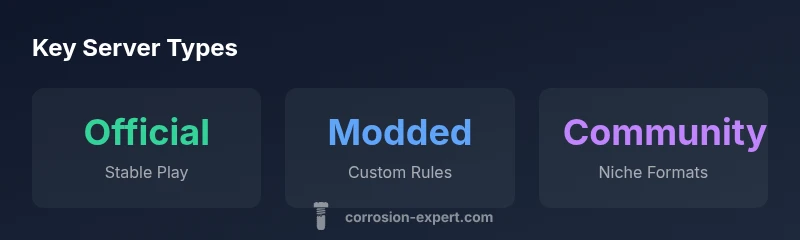
Understanding server types helps explain why Willjum or any player might appear on different arenas over time. Official Rust servers are maintained by the game’s core framework and often feature predictable wipe schedules, basic loot mechanics, and standardized rules. In contrast, modded or community servers introduce custom plugins, altered XP curves, enhanced building protections, or unique raid timers. These differences can attract players with specific goals—career builds, creative bases, or high-risk PvP environments—and influence how often they switch servers. The choice of server type also affects latency, mod support, and compatibility with friends or clans, which can be crucial for group play or coordinated events. If you want to model Willjum’s potential server behavior, consider the balance he may seek between competitiveness, progression pace, and social interaction. This framing helps you interpret signals from streams or posts in a more grounded way, rather than expecting a single, static server listing.
Additionally, the community-driven ecosystem often creates semi-permanent rosters on certain servers, while official blocks can see more frequent changes due to patches and admin decisions. In practice, a player like Willjum might participate in a mix: some official sessions for reliability, plus mods for variety, and community servers for specialized challenges. Adopting this lens makes it easier to analyze public cues without assuming an exhaustive or permanent server itinerary.
Data sources and limitations when tracking server activity
Tracking server activity in Rust involves navigating several data reliability and privacy considerations. Public signals—streams, clips, banners, and server posts—are inherently incomplete and subject to selective sharing. Streamers may only display certain servers, while other plays happen out of frame. On the data quality side, wipe dates, player counts, and plugin configurations can vary by server and patch, leading to noisy signals. Therefore, triangulation should rely on corroborating evidence across multiple sources rather than a single data point. Discussions in community forums can offer context but may also introduce bias. Finally, respect for privacy is essential: do not attempt to deduce sensitive information about a player or their private network. Safety-focused researchers emphasize obtaining consent when feasible and avoiding invasive data harvesting. When interpreting Willjum’s activity, treat any single source as suggestive rather than definitive and always acknowledge uncertainty.
From a methodological standpoint, maintain a transparent trail of sources, note discrepancies, and clearly indicate assumptions. This discipline supports more credible conclusions and helps readers understand the confidence level behind any claims about server activity.
A practical approach to researching server activity responsibly
A responsible research plan for Willjum’s Rust server activity unfolds in a few clear steps. First, define the question scope: are you trying to understand general preferences (official vs. modded) or identify specific servers? Second, collect signals from public sources—streams, channel banners, and server rosters—while bookmarking dates and times to ensure recency. Third, triangulate signals by cross-referencing multiple sources for consistency, such as a Twitch clip matching a server name posted in a Discord channel. Fourth, document uncertainty explicitly, avoiding bold assertions about exact servers. Fifth, present findings as conditional statements: "based on available signals as of [date], these are the likely server profiles." Finally, always consider privacy and platform policies; avoid any attempts to locate or reveal private data. This framework enables thoughtful, reproducible analysis without overstepping ethical boundaries. The goal is to educate DIY players on verification methods rather than to compile a definitive server roster for a real person.
In practice, you’ll build a living, transparent appendix of sources that readers can audit, enabling independent validation and ongoing updates as new signals emerge.
What to do if you can't confirm Willjum's current servers
If confirmation remains elusive, pivot to a general understanding of how players typically approach server discovery rather than chasing a specific list. Document the most credible public signals you found—streams, banners, or community posts—without asserting they represent a comprehensive roster. Emphasize the topic's dynamic nature and the likelihood that values change with patches, new mods, or clan reshuffles. Offer readers a set of safe, repeatable steps to monitor for updates, such as subscribing to Willjum’s streams, following his official social channels, and joining relevant community groups. By framing the effort as a systematic search rather than a definitive tally, you maintain credibility and respect for privacy while still providing actionable guidance for Rust enthusiasts who want to understand common server behaviors.
This approach preserves integrity in the face of data scarcity and aligns with best practices for handling public information in gaming communities.
Practical takeaways for DIY Rust players
- Start with public signals (streams, banners, posts) to infer server activity.
- Distinguish between official, modded, and community servers to understand potential play styles.
- Verify signals across multiple sources and clearly label uncertainty.
- Respect privacy and avoid attempting to uncover private data or doxxing.
- Use a transparent, cited process to share your conclusions with readers.
- Treat any single server as a data point, not a definitive roster, and update as new information surfaces.
- Encourage readers to form their own conclusions based on reproducible methods rather than guessing.
- Remember that Willjum’s server choices can be fluid; maintain a flexible interpretation framework.
Examples of Rust server types
| Server Type | Typical Population | Notes |
|---|---|---|
| Official PvP | Hundreds online | Competitive with regular wipes |
| Official PvE | Dozens online | Focus on base-building and exploration |
| Modded Community | Tens to hundreds online | Custom rules and plugins; varied activity |
Quick Answers
Is there a public list of Willjum's Rust servers?
No universal public list exists. Server activity is dynamic and often not disclosed by players. Use public signals and community posts to form an educated view, without claiming a definitive roster.
There isn’t a public list of servers Willjum uses; rely on public signals and community posts to form an educated view.
How can I verify Willjum’s activity without invading privacy?
Focus on public data such as streams, banners, and forum posts. Cross-check dates and server names across multiple sources and clearly label any inference as such.
Use public signals like streams and banners, and cross-check dates. Never pry into private data.
What if data sources conflict or seem outdated?
Treat older data as historical context and prioritize the most recent signals. Explain discrepancies and avoid making sweeping claims beyond what the signals support.
When sources conflict, prioritize the newest signals and clearly note uncertainties.
Do server types influence what Willjum plays?
Yes. Official servers tend to offer stability, modded servers provide customization, and community servers offer niche rulesets. A player may rotate among these to pursue different gameplay goals.
Server types shape how players play, but individuals mix types for variety.
How can I apply these methods to my own Rust research?
Adopt a transparent, source-backed workflow: collect signals, triangulate, label uncertainty, and update as new data arrives. This keeps your conclusions credible and useful for readers.
Use a transparent, source-based approach and keep updating as new signals come in.
What if I want to explore Willjum’s public presence in other games?
For other games, apply the same signal-based verification approach: public streams, official posts, and community discussions are your best starting points. Maintain privacy and avoid speculation.
You can apply the same approach to other games by checking public signals and staying respectful.
“Exact server choices for a private player can change rapidly; use public data responsibly and interpret signals with caution.”
Quick Summary
- Identify credible signals from public sources
- Differentiate server types to infer playstyle
- Triangulate data across multiple signals
- Respect privacy and avoid intrusive data collection
- Document uncertainty transparently