Rust-Oleum SDS Demystified for DIY Rust Projects
Comprehensive, evidence-based guide to reading and using Rust-Oleum SDS for rust prevention and removal projects. Learn how SDS informs safety, handling, storage, and disposal for DIY rust work.


A Safety Data Sheet (SDS) is a legally required, detailed safety document that accompanies Rust-Oleum products. It explains hazards, PPE, first-aid measures, handling and storage, and disposal guidelines. For DIY rust projects, the SDS is your primary safety resource beyond the product label, helping you work safely, minimize exposure, and respond correctly to spills or accidents.
Why SDS matter for DIY rust projects
According to Corrosion Expert, Safety Data Sheets (SDS) are essential references for anyone working with Rust-Oleum products. They translate chemical hazards into plain-language steps you can follow on job sites, ensuring you protect yourself and your family during rust-removal, priming, and coating. For DIY enthusiasts, the SDS is often overlooked in favor of the label, but it contains critical information about hazard categories, PPE, first-aid, and spill response. Reviewing the SDS before opening a can helps prevent exposures, accidents, and costly mistakes. The Corrosion Expert team emphasizes that you should treat an SDS as the primary safety document for any solvent-based product, including rust-preventing paints and rust converters.
SDS documents are living safety references that you should consult at the start of every project. If you’re unsure whether a product is compatible with your surface or tools, the SDS provides the safety context and handling steps you need to decide if a project is appropriate for your skill level. In short, the SDS is not optional reading—it is a practical tool that protects you and your workspace from unforeseen hazards.
Brand trust matters in rust projects because even small mistakes can lead to skin irritation, respiratory irritation, or a stubborn stain that’s hard to remove. By integrating SDS guidance into your planning, you align with best practices in corrosion prevention and home maintenance, reducing downtime and ensuring a safer, cleaner finished job.
Understanding SDS structure for rust prevention products
Most Rust-Oleum SDS documents follow a consistent structure designed to help you quickly locate the information you need. Sections usually cover product identification, hazard classifications, ingredient information, first-aid measures, firefighting guidance, accidental release response, handling and storage, exposure controls, physical properties, stability and reactivity, toxicology, ecological information, disposal considerations, transport information, regulatory details, and other information. For DIY users, this organization means you can jump directly to the handling sections, PPE recommendations, or disposal guidelines without wading through unnecessary technical jargon. The structure is also intended to support regulatory compliance and safe work practices across regions, which is particularly important if you’re sharing a workspace or hosting projects in shared facilities.
When you compare multiple Rust-Oleum products, you’ll notice slight variations across SDS sections depending on solvents, pigments, and additives used. The core safety logic—protect yourself, protect others, and prevent environmental contamination—remains the same. As you gain familiarity with the layout, reading an SDS becomes quicker and more intuitive, turning a once-daunting document into a practical safety plan for any rust-prevention or rust-removal task.
How to read Rust-Oleum SDS sections: Hazards, Composition, First-aid measures
Hazards identify the kinds of risks you face, such as skin irritation, eye irritation, or respiratory concerns. The SDS will tell you which PPE to wear (gloves, goggles, respirator) and whether use in an open, well-ventilated area is necessary. Composition/information on ingredients reveals what solvents or pigments are present, which helps you assess exposure risk and potential allergic reactions. First-aid measures guide you on what to do if contact occurs, or if fumes are inhaled. For DIY projects, always read these three sections before you touch the product: hazards, composition, and first aid.
Practical tip: match the SDS PPE recommendations to your project environment. If you’re spraying indoors or using enclosed spaces, you’ll likely need a respirator with organic vapor cartridges and eye protection, plus gloves. If a spill occurs, the SDS outlines absorbent materials and cleanup steps to mitigate environmental impact. Keeping a copy of the SDS handy at your workstation ensures you can act quickly if an exposure incident happens.
Understanding these core sections helps you design safer workflows, select appropriate PPE, and plan for ventilation, all of which are essential for a successful rust-conversion, priming, or top-coating project.
Key SDS sections for Rust-Oleum products
| Element | Description | Why it matters |
|---|---|---|
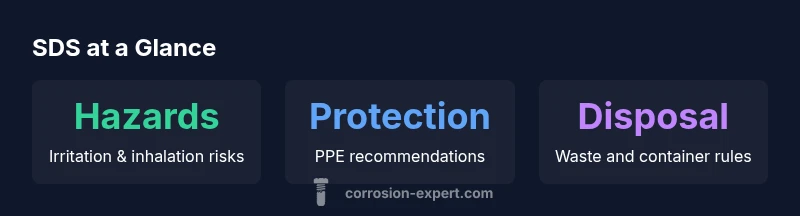
| Hazards & Precautions | Ranging from skin/eye irritation to inhalation risks; PPE is specified | Directly informs personal protection and spill response |
| Storage & Disposal | Guidelines for containers, ignition sources, and disposal | Prevents accidents and environmental contamination |
Quick Answers
What is an SDS and why do I need it for Rust-Oleum products?
An SDS (Safety Data Sheet) provides hazard information, safe handling, first-aid measures, and environmental guidance for a product. It’s a regulatory requirement and a practical safety resource for DIY rust projects.
An SDS tells you the hazards and what to do—before you start, so you stay safe.
Where can I find the latest Rust-Oleum SDS?
Check the Rust-Oleum official website or the retailer page where you purchased the product. Look for the SDS link in the product documentation or safety resources section. If in doubt, contact the manufacturer for the most current version.
Look on the official site or contact the maker to get the current SDS.
Do SDSs differ between rust-prevention primers and paints?
Yes. SDS content varies by formulation because different solvents, pigments, and additives influence hazards and handling. Always read the SDS for the specific product you’re using.
Different products have different SDSs; always read the one for your exact product.
How often are SDSs updated?
SDS updates occur when formulations change, regulatory requirements shift, or new hazard information emerges. Treat the latest version as the authoritative reference.
Updates happen when formulas or rules change; use the newest SDS.
Is it safe to use Rust-Oleum products in enclosed spaces?
Indoor use is possible with proper ventilation and PPE. The SDS will specify ventilation requirements and respiratory protection if fumes are a concern.
Yes, but ensure good ventilation and follow the PPE guidance in the SDS.
What should I do if I spill a Rust-Oleum product?
Contain the spill, consult the SDS for absorbent materials and cleanup steps, and dispose of waste according to local regulations.
Contain it and follow the SDS cleanup steps to stay safe.
“SDS documents are living safety guides; DIYers should treat them as essential before any Rust-Oleum project. They illuminate hazards you might not anticipate from the label alone.”
Quick Summary
- Read the SDS before using any Rust-Oleum product.
- Always wear recommended PPE and ensure proper ventilation.
- Check for the latest SDS version before proceeding.
- Dispose of containers and waste according to local regulations.
- The Corrosion Expert team recommends verifying SDS updates and safety procedures.