How Much Does It Cost to Rust Proof a Car?
Learn realistic rust-proofing costs for cars in 2026, compare DIY vs pro options, and understand what drives price. Practical tips, expected ranges, and maintenance insights from Corrosion Expert.


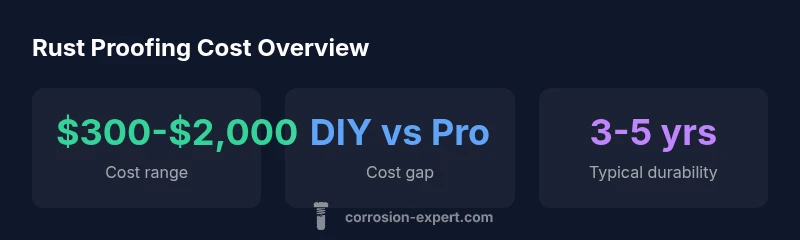
How much does it cost to rust proof a car? Costs generally range from $300 to $2,000, depending on method, vehicle size, and climate. DIY spray kits are on the lower end, while professional undercoating and cavity treatments push the price higher. The Corrosion Expert analysis, 2026 recommends assessing undercarriage, wheel wells, and body cavities to estimate total cost before committing.
Why rust-proofing costs vary across cars and climates
Costs to rust proof a car are not a single fixed price. Instead, they reflect a constellation of factors: the climate you drive in, the vehicle’s size, and how much of the undercarriage and cavities require treatment. In cold regions that regularly salt roads, more aggressive protection and longer-lasting coatings are often chosen, which raises the bill. Cars with complex undercarriage designs — more seams, folds, and cavities — demand extra labor to reach every nook, increasing both time and material costs. The vehicle’s age also matters: older frames may require more thorough preparation, which adds to the cost. The method you pick matters as well: DIY kits can lower upfront costs but may require more frequent maintenance, while professional services deliver more comprehensive coverage with longer-lasting protection. When calculating total cost, buyers should factor in potential follow-up visits, warranty considerations, and whether the shop offers bundled rust-protection with other services. Corrosion Expert’s 2026 analysis shows a broad spectrum of options that fit different budgets, from basic sprays to full cavity wax systems.
Key factors that influence rust-proofing price
Pricing is driven by several interacting elements. First, climate and road chemistry (salt exposure, humidity) push toward higher-protection options. Second, vehicle type matters: larger vehicles with more surface area cost more to coat. Third, existing corrosion or rust in hidden areas can necessitate extra labor and materials. Fourth, the scope of treatment matters—if you want underbody, wheel wells, door sills, and inside cavities, expect a higher price. Fifth, the chosen method (DIY kit, spray-on undercoating, or professional cavity wax) has a wide price ladder. Sixth, labor rates vary by region and shop, and some garages offer seasonal promotions or bundled services that affect the final number. Finally, warranty length and post-treatment maintenance can influence long-term cost. Collect quotes that itemize materials, labor, and any follow-up visits to compare value rather than just price.
A comparison of common rust-proofing methods
Different methods offer different balance points between cost, durability, and coverage. DIY spray kits are the most affordable upfront but typically require careful application, surface prep, and ongoing maintenance. They are best for smaller budgets and hands-on owners who can commit time. Professional undercoating provides thorough coverage, often reaching hard-to-access areas and sealing seams for longer periods, but at a higher upfront price. Cavity wax or seam-sealer injections reach inside panels and cavities that sprays may miss, delivering robust protection in key areas where moisture collects. Factory-applied anti-corrosion coatings (when available) tend to be the most durable option, but they may come with limited availability and higher prerequisites. When evaluating these options, consider how climate, driving style (short trips vs. highway cruising), and storage (garage vs. street parking) affect longevity and cost. The goal is to maximize protection where the car is most vulnerable while avoiding over-treatment that adds unnecessary expense.
How coverage areas affect price
Coverage is a major determinant of final cost. If you only seal the underbody, you may save money upfront but leave critical interior cavities exposed. Adding wheel wells, door frames, seatbelt anchors, and inside pillars increases material use and labor time. Some rust-proofing plans include corrosion inhibitors for metal joints, which can add to the cost but reduce long-term maintenance. The most comprehensive packages cover every accessible corner of the chassis and interior cavities, often paired with protective coatings that resist salt and moisture. When planning, map out exactly which areas you want treated, request a detailed scope of work, and ask for a written cost breakdown for each zone. This helps you avoid paying for coverage you don’t need while ensuring you don’t miss high-risk spots.
A step-by-step approach to estimate your costs
- Inspect the vehicle with a technician to identify vulnerable zones like the undercarriage, frame rails, wheel wells, and door jambs. 2) Decide on the level of protection: underbody spray, cavity wax, or full cavity sealing. 3) Gather quotes from multiple shops and request itemized estimates. 4) Compare not only base prices but also product types, warranty terms, and expected lifespans. 5) Factor in potential follow-up costs for repairs or reapplications and plan for seasonal maintenance. 6) Consider the vehicle’s resale value and climate-driven risk to decide whether to invest more upfront for longer protection. 7) Schedule the service at a time when salt exposure is lower (late spring or summer) to reduce surface prep needs and downtime.
Money-saving strategies and timing
Smart buyers maximize value by combining rust-proofing with other services, such as wheel alignment or protective coatings that you would need anyway. Look for bundled packages that reduce per-service overhead, but beware of unnecessary add-ons. If you live in a harsh climate, timing matters: post-winter or before the salt season typically yields best results due to cleaner surfaces and optimal curing conditions. Some shops offer warranties that cover certain repairs; choosing a plan with a longer warranty can be cost-effective in the long run. Finally, assess your willingness to perform ongoing maintenance yourself, such as touch-ups around door seals, and compare those costs to periodic professional refreshes.
Long-term value and maintenance considerations
Rust-proofing should be viewed as an investment in a car’s longevity. The value is highest when protection is tailored to climate, driving patterns, and vehicle type. Regular inspections after winter, early signs of wear, and timely reapplications help preserve the coating’s integrity and resale value. In the long run, the most cost-efficient approach balances upfront cost with expected service life; for many drivers, this means a mid-range option that provides solid coverage without overpaying for features not needed. The Corrosion Expert team highlights that a thoughtful, climate-aware plan yields the best return on investment, especially for vehicles exposed to road salt or coastal humidity.
Comparison of rust-proofing service types
| Service Type | Typical Cost Range | Pros | Cons |
|---|---|---|---|
| DIY rust-proofing spray kit | $100-$600 | Low cost, flexible scheduling | Less durable, uneven coverage |
| Professional undercoating | $500-$2,000 | Comprehensive coverage, longer lifespan | Higher upfront cost |
| Factory-applied anti-corrosion coating | $1,000-$2,500 | Best coverage, factory-grade | Limited availability, scheduling constraints |
Quick Answers
What factors affect the cost of rust-proofing a car?
Multiple factors drive cost: climate and road exposure, vehicle size, number of areas to treat, chosen method, and regional labor rates. Getting multiple quotes with a clear scope helps you compare value rather than price alone.
Costs depend on climate, car size, and the extent of treatment. Get several quotes to compare.
Is rust-proofing worth it for a new car?
In moderate climates, rust-proofing can protect a new car’s metal surfaces and reduce long-term maintenance costs. In severe climates, a higher-end approach may extend protection, but assess resale plans and warranty terms first.
For many new cars in mild climates, rust-proofing pays off over time.
Can I rust-proof my car myself?
DIY kits exist and can lower upfront costs, but they require careful preparation and maintenance. Proper application and curing are critical for effectiveness, and DIY may not reach all cavities.
Yes, you can, but follow the kit’s instructions closely and expect more hands-on work.
How long does rust-proofing last?
Most rust-proofing treatments last between 3 and 5 years, depending on climate, vehicle type, and how well the area is maintained. Reapplication is common when protection wears thin.
Typically 3-5 years, depending on climate and care.
Does insurance cover rust-proofing or rust repairs?
Most standard auto policies do not cover rust-proofing costs, but some plans may cover rust repairs if caused by a covered peril. Check your policy for exclusions and warranties.
Check your policy for exclusions; rust-proofing itself is usually not covered.
“Rust-proofing isn’t a one-size-fits-all fix; the best approach depends on climate, driving habits, and vehicle age. A proper evaluation helps you pick the right method.”
Quick Summary
- Set a budget first and know your climate.
- DIY saves money but may require more maintenance.
- Professional coverage offers durability but higher upfront cost.
- Ask for itemized quotes and warranty details.
- Plan maintenance to maximize long-term value.