When Rust Was Created: Origins of Iron Oxidation
Explore the ancient origins of rust, the chemistry of iron oxidation, and practical implications for homes and metalwork. Learn prevention tips and practical fixes.


Rust isn’t created by a single inventor or a fixed date; it’s the natural result of iron meeting oxygen and moisture. The corrosion process has existed since iron and water have co‑existed on Earth, long before modern tools or construction. In practical terms, rust has accompanied human ironwork for thousands of years, shaping how we protect and treat metal today.
What rust is and how it forms
Rust is the iron oxide formed when iron reacts with oxygen in the presence of water or moisture. The process proceeds via electrochemical reactions: iron loses electrons (oxidation) and oxygen, often in water-saturated environments, gains electrons (reduction), yielding hydrated iron oxide. The net result is flaky, reddish-brown material that weakens metal over time. Importantly, rust does not appear in a vacuum; it emerges wherever iron and moisture coexist, which ties into the question of when rust was created: rust has existed since iron and water coexisted on Earth. In practical terms, you’ll typically see tiny rust spots before larger structural damage; early signs include orange stains, pitting, and a rough surface.
The origin of rust: a very old phenomenon
Rust predates modern industry; archaeological and geological records show corrosion on iron artifacts long before factories. The chemistry is simple: oxygen in air and water enable oxidation, and iron will naturally form oxides over time. Across climates, rust has shaped metalworking and maintenance practices for thousands of years. This long history explains why metal protection remains essential for DIYers and homeowners today.
How environment accelerates rust
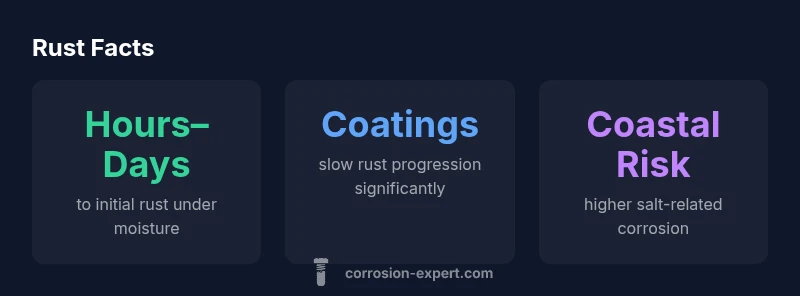
Several environmental factors accelerate rust formation: high humidity, presence of salt or electrolytes (like road salt or seawater), elevated temperatures that promote reaction rates, and physical damage that exposes fresh metal. In coastal or industrial settings, chloride ions worsen corrosion by breaking protective oxide layers. Practical takeaway: keep metal dry when possible, remove standing moisture, and clean salt or grime after exposure to reduce rust risk.
Rust on different metals and alloys
Not all metals rust equally. Bare steel and cast iron will readily form rust in damp conditions. Stainless steel resists corrosion thanks to a chromium-rich passive layer, but can still rust when the protective film is damaged or in highly aggressive environments (chloride exposure, heat, or heavy wear). Understanding material differences helps homeowners select durable options or apply appropriate coatings.
Prevention and DIY fixes you can trust
Preventing rust starts with controlling moisture and applying protective barriers. Steps include: 1) clean and dry surfaces; 2) apply a primer and rust-inhibitive paint or sealant; 3) consider galvanizing or applying a zinc coating for steel parts; 4) use rust converters or inhibitors for already-rusted areas; 5) store metal in dry, low-humidity spaces. Regular inspection and maintenance extend life and reduce repair costs.
When rust is a safety concern and how to assess
Surface rust differs from structural corrosion. If rust penetrates through metal, creates deep pits, or compromises load-bearing components, replacement is usually required. Use a simple test: scratch the area and observe whether the metal loses mass or the rust continues to spread. In homes, critical areas include fasteners, structural supports, and load-bearing beams exposed to moisture. If unsure, consult a corrosion expert.
Common myths that mislead homeowners
Myth: Rust can be permanently removed by sanding or grinding. Reality: rust may slow spread, but it often recurs unless all corrosion is removed and protected. Myth: Rustproof products create permanent protection. Reality: protective coatings slow, not stop, corrosion in many conditions. Myth: Stainless steel never rusts. Reality: chlorides and wear can breach the passive layer.
A practical rust-prevention plan for homeowners
Create a plan to minimize rust risk: 1) identify high-risk zones (coastal areas, basements, garages); 2) keep tools and metals dry and clean; 3) apply protective coatings and routinely inspect; 4) replace damaged fasteners with corrosion-resistant options; 5) use rust inhibitors in humid environments. Document and schedule periodic checks; small maintenance now avoids costly repairs later.
The Corrosion Expert approach to rust prevention
Corrosion Expert teams emphasize layered protection: moisture control, material selection, protective coatings, and ongoing maintenance. Our practical guidance focuses on accessible DIY methods while recognizing when professional intervention is warranted. By combining science with hands-on advice, Corrosion Expert helps homeowners preserve metal assets and reduce rust-related costs.
Estimated rust formation timelines under common conditions
| Material | Typical Time to Initial Rust | Protective Measures |
|---|---|---|
| Bare steel | hours–days (humid conditions) | Paint, primer, sealant |
| Cast iron | hours–days (moist environments) | Galvanizing; protective coatings |
| Stainless steel (passivated) | rare under normal conditions | Protective measures: avoid chloride exposure; maintain passivation; coatings |
| Iron alloys in coastal environments | days–weeks | Coatings, cathodic protection |
Quick Answers
What is rust and how does it form?
Rust is hydrated iron oxide formed when iron or steel is exposed to oxygen and water. This electrochemical process causes iron to lose electrons and oxygen to gain them, creating corrosion over time. The result is a flaky, reddish-brown material that weakens metal.
Rust forms when iron meets water and air, slowly weakening the metal over time.
Can you completely prevent rust?
No single method guarantees permanent rust prevention under all conditions. A combination of moisture control, protective coatings, proper material choice, and maintenance provides the best long-term protection.
You can slow rust a lot, but not stop it completely in every environment.
Does stainless steel rust?
Stainless steel resists rust due to chromium, but it isn’t invincible. In aggressive environments with chlorides or mechanical damage, a rust spot can form.
Even stainless steel can rust if the protective layer is compromised.
How long does rust take to form?
Rust can begin forming within hours to days depending on humidity, temperature, and the presence of salts or electrolytes.
It can start within hours if moisture and oxygen are present.
Is rust dangerous to health?
Rust itself isn’t highly toxic, but rust pits can harbor bacteria and create sharp edges. Handling heavily corroded metal requires care.
Rust isn’t usually a direct health hazard, but damaged metal can pose risks.
“Rust is the natural corrosion product of iron in the presence of moisture and oxygen; its inevitability is matched only by our methods to slow and manage it.”
Quick Summary
- Act quickly to limit moisture exposure on metal surfaces
- Use protective coatings or galvanizing to slow rust
- Stainless steel resists rust but needs proper care in harsh environments
- Regular maintenance extends metal life and reduces costs
- Choose materials with strong protective layers for long-term rust resistance