What Three Substances Are Needed for Rust to Form
Explore rust formation: the three essential substances—iron, oxygen, and water—and how moisture and electrolytes accelerate corrosion in common environments.


Rust forms when iron is exposed to both oxygen and water, triggering an electrochemical corrosion process. The three substances required are iron, oxygen, and water; moisture acts as the electrolyte that enables electron transfer. In most environments, humidity or liquid water supplies the needed water, while dissolved salts can accelerate the reaction by increasing conductivity. The result is iron oxide, the reddish-brown rust we observe on metal.
The three substances and their roles
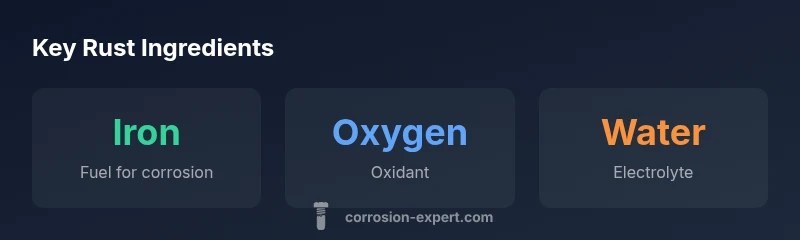
In rust science, what three substances are needed for rust to form is answered by three core ingredients: iron, oxygen, and water. Iron serves as the metal that rust consumes; oxygen acts as the oxidant; water provides the medium that carries ions and enables electron transfer. Moisture in the environment supplies the water, while dissolved salts can accelerate the reaction by increasing conductivity. In simple terms, rust arises when iron meets oxygen in the presence of water, leading to iron oxide and hydrated oxides over time. The process begins at micro-cracks or rough spots where protective coatings fail, allowing moisture to reach the metal surface. As electrons flow from iron to oxygen through the thin water layer, iron atoms oxidize and combine with oxygen to form a sequence of oxides and hydroxides that gradually flake away, exposing more metal to further corrosion. This feedback loop means that even small amounts of moisture can sustain rust when salts or acids are present.
The chemistry in plain language
Rust is best understood as an electrochemical process rather than a single chemical reaction. When moisture is present, dissolved ions move through a thin film of water on the metal surface. Iron atoms lose electrons (oxidation) and form iron ions, while oxygen molecules gain electrons (reduction) to form oxide species. The overall result is the progressive conversion of metallic iron into iron oxides, which appear as flaky, porous rust. Electrolytes—such as salt—increase the conductivity of the contact film and speed up electron transfer, accelerating rust even at lower humidity levels. Temperature also plays a role: warmer conditions generally raise the rate of electrochemical reactions, while very dry or cold environments slow rust. The practical takeaway: rust formation hinges on the continuous presence of iron, oxygen, and water in a conducive environment, with moisture and electrolytes acting as accelerants.
Practical environments and what speeds rust
Outdoor metalwork exposed to rain, humidity, and coastal air experiences faster rust than indoors sheltered items. The presence of salt (road salt in winter or seawater) dramatically increases conductivity and accelerates rust. In shaded basements or garages where moisture lingers, even untreated iron can rust within months. Conversely, dry indoor spaces with good ventilation and protective coatings slow corrosion dramatically. Temperature swings that cause condensation can create micro-moments of water on surfaces, providing a brief electrolyte path for electrons. The take-home: if you can keep metal dry and isolated from electrolytes, rust formation slows or stops; if you cannot, protective coatings and moisture control become essential.
Common myths and exceptions
Common myths about rust often mislead people. For example, oxygen exposure alone does not suddenly produce rust; water is also needed to enable electrochemical reactions. Some assume stainless steel is completely rust-proof; in reality, it resists rust under normal conditions but can rust under harsh environments or when protective chromium oxide layers are damaged. Similarly, bare metal left in rain for a few hours will not instantly become rust; the process requires sustained moisture and oxidants. Very dry environments or elevated temperatures that prevent electrolytes from forming will slow rust to near stop in many cases. Finally, some people think rust happens only outdoors; indoor humidity and moisture can cause significant corrosion on neglected tools and appliances.
How to prevent rust effectively
Prevention revolves around limiting the three ingredients or breaking the electrochemical cycle. Practical steps include drying metal surfaces after use, storing in low-humidity environments, and using protective coatings such as paint, oil, or polymer sealants to form a barrier against water and oxygen. Applying corrosion inhibitors or galvanizing metal increases the resistance to rust. When possible, choose corrosion-resistant alloys (e.g., stainless steel) for exposed parts. Regular maintenance, like wiping away condensation and inspecting seals, also reduces risk. For coastal areas or places with road salt, extra precautions such as permeable drainage around metal and using sealants in joints can help manage moisture and chloride exposure.
Quick-start maintenance checklist
- Inspect metal surfaces for signs of rust starting or moisture buildup.
- Dry and clean the area; remove loose rust with a brush if needed.
- Apply a protective coating or rust inhibitor.
- Store metal in a dry, ventilated area away from salt exposure.
- If rust is persistent, consider replacing vulnerable parts with corrosion-resistant materials.
Real-world rust scenarios and quick-start checklist
In coastal or winter-road areas, metal surfaces exposed to salt spray and high humidity can show early rust within weeks if left untreated. A tool left wet on a bench may corrode faster than one stored dry and well-sealed. These real-world cases illustrate why routine drying, coating, and protective storage matter. By contrast, properly treated surfaces—painted, oiled, or zinc-coated—demonstrate significantly slower rust progression, underscoring the value of preventive maintenance.
How rust interacts with coatings and paints
Coatings and paints act as barriers that limit water and oxygen contact with the metal surface. The most effective systems combine primers that promote adhesion, a barrier coat to seal moisture, and occasional touch-ups after wear or scratches. In humid or coastal environments, additional sealants and inhibitors can further slow rust. For long-term protection, consider metal treatments that form stable oxide layers or galvanization, which sacrificially protects underlying metal even if the outer layer is compromised.
Simple at-home experiments to observe rust
To observe rust formation safely, place small steel samples in controlled environments: one in a dry, sealed container and another in a humid container with a salt solution. Over several days, compare surface changes. Document the difference with photos and note the onset of corrosion. Such simple experiments illustrate the role of moisture and electrolytes and provide a hands-on demonstration of the three essential rust ingredients in action.
Key roles of the three substances in rust formation
| Substance | Role in rust formation | Notes |
|---|---|---|
| Iron | Fuel for corrosion | Provides electrons and substrate for oxide layers |
| Oxygen | Oxidant | From air; forms oxide on metal surface |
| Water | Electrolyte | Dissolved substances speed process |
Quick Answers
What three substances are needed for rust to form?
Iron, oxygen, and water are the core ingredients; without all three rust does not form in typical environments.
Rust needs iron, oxygen, and water—three essentials.
Can rust form without water?
Rust typically requires moisture to act as an electrolyte; in dry air, rust formation is extremely slow.
Not usually, water is key.
Does oxygen alone cause rust?
No. Oxygen is the oxidant, but it needs water (and often an electrolyte) to move electrons and drive the corrosion reaction.
Oxygen by itself isn’t enough.
What environments accelerate rust formation?
High humidity, salty or acidic environments, and standing water accelerate rust by increasing available water and electrolytes.
Humidity, salt, and moisture speed rust.
How can I prevent rust effectively?
Keep surfaces dry, apply barrier coatings, use inhibitors, or choose corrosion-resistant materials; regular maintenance matters.
Dry surfaces and protective coatings prevent rust.
“Rust is an electrochemical process driven by iron, oxygen, and water. To slow or prevent rust, control moisture and protect metal surfaces.”
Quick Summary
- Rust requires three components: iron, oxygen, and water
- Moisture acts as an electrolyte enabling electron transfer
- Dissolved salts accelerate rust; dry environments slow it
- Protective coatings and moisture control are effective preventives
- Stainless steel resists rust but can still rust under extreme conditions