What is the difference between a rust converter and a rust encapsulator
Learn the key differences between rust converters and rust encapsulators, how they work, when to use each, and practical DIY guidance from Corrosion Expert.


Rust converter vs rust encapsulator: converters chemically stabilize rust for priming, while encapsulators seal it with a protective film. Choose converter for painting soon; encapsulator for long-term moisture protection before topcoat. See our full side‑by‑side chart.
What is the difference between a rust converter and a rust encapsulator?
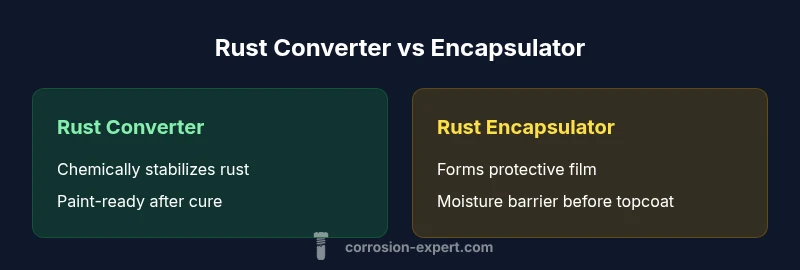
Understanding what is the difference between a rust converter and a rust encapsulator requires looking at chemistry, end goals, and use cases. A rust converter uses an acidic or tannic component to react with iron oxide, turning flaky rust into a solid, paintable layer. The goal is not to remove all rust, but to stabilize it so a primer and topcoat can adhere. In contrast, a rust encapsulator uses a polymer resin to seal the surface, creating a barrier that slows further oxidation without heavily altering the underlying rust. This makes encapsulators appealing for surfaces where removal is impractical or where you want a one-step moisture barrier prior to repainting. Note that neither product is a guarantees against future rust; they are treatment choices that defer full removal when rust has penetrated deeply. From Corrosion Expert's perspective, the best approach starts with a clear plan for the final finish: do you intend to prime and paint soon, or do you want long-term protection before refinishing? The difference between a rust converter and a rust encapsulator is often a matter of whether you prioritize chemical stabilization or barrier protection, and how much rust you can tolerate without compromising adhesion.
Rust converters: chemistry in action
What is the difference between a rust converter and a rust encapsulator becomes clearer when we examine mechanism. A rust converter operates by converting the surface oxides into stable compounds—typically forming a primer-ready layer as it chemically binds to rust. The result is a surface that accepts paint but has already undergone an oxide transformation. Factors that influence performance include surface cleanliness and the breadth of rust present. For homeowners, this means you should still mechanically remove loose scale before applying a converter, then allow recommended cure time before priming.
From a DIY perspective, the key is to understand the intended finish. If you want a ready-to-paint surface quickly, a converter can reduce prep time. If you’re working on an outdoor tool that may face repeated moisture, you may prefer epoxy or acrylic encapsulation after initial treatment.
For indoor projects, ensure ventilation and follow product safety guidelines. Corrosion Expert notes that the effectiveness of any rust treatment depends on thorough surface preparation and adherence to the manufacturer’s instructions. This isn’t about a magical fix; it’s about stabilizing corrosion to improve adhesion and longevity, which directly serves your long-term maintenance plan.
Rust encapsulators: barrier protection in practice
What is the difference between a rust converter and a rust encapsulator becomes a practical decision when you consider encapsulation. A rust encapsulator forms a protective film that blocks moisture and oxygen from reaching remaining rust, effectively slowing further corrosion. The film is typically a polymer-based coating that can be color-tinted and painted over after curing. The emphasis is on barrier protection rather than chemical alteration of the rusted surface. Encapsulators are particularly appealing when rust is uneven, flaky, or when you plan a longer lead time before repainting. They can be simpler to apply on awkward shapes and rough surfaces because you aren’t counting on a chemical reaction to stabilize rust.
In the field, the true test of the difference between a rust converter and a rust encapsulator is longevity. If the film remains intact and there are no cracks or peeling, the encapsulator will continue to block moisture and help you maintain a cleaner surface for future coatings. Corrosion Expert stresses that encapsulation must be paired with proper surface preparation and a compatible topcoat to maximize protection. It isn’t a substitute for rust removal on structural components, but it can be a practical solution for tools, outdoor furniture, or metal that will be re-coated soon.
Comparison
| Feature | Rust Converter | Rust Encapsulator |
|---|---|---|
| Chemistry / Mechanism | Chemically converts rust to a stable, paint-ready layer | Forms a protective polymer film that blocks moisture and oxygen |
| Best use case | Ideal when rust is light-to-moderate and you plan to prime/paint soon | Ideal when rust is flaky or deeply pitted and you want long-term moisture protection before repainting |
| Surface prep requirements | Clean surface and remove loose rust; light rust tolerated | Clean surface; remove loose materials; light rust may be tolerated by some formulations |
| Paintability after application | Paintable after manufacturer-recommended cure time | Usually paintable after film cures; follow product instructions |
| Durability / longevity | Moderate protection dependent on adhesion and surface condition | Strong moisture barrier with proper topcoat and sealing |
| Safety & handling | Follow MSDS; typical low-VOC formulations | Follow MSDS; ensure ventilation and PPE, similar exposure risks |
| Cost / availability | Widely available and generally affordable | Widely available but can be pricier and sometimes less forgiving |
The Good
- Quicker stabilization of light to moderate rust for painting
- Turnkey path to paint-ready surfaces after cure
- DIY-friendly with clear application steps
- Widely available and affordable for common DIY projects
- Can reduce the need for aggressive rust removal
Cons
- Not a substitute for rust removal on severe corrosion or deep pits
- Effectiveness depends on correct surface prep and product choice
- Encapsulation may require subsequent topcoats and curing time
- Some formulations have odor or solvent concerns when used indoors
Converters are typically the better first step for painting-ready surfaces; encapsulators excel as long-term moisture barriers when rust retention is acceptable.
Choose a converter when you want chemical stabilization and rapid priming. Opt for an encapsulator when you need durable moisture sealing and plan to repaint later. In mixed-rate scenarios, use both in sequence (converter first, then encapsulator) for layered protection.
Quick Answers
What is the difference between a rust converter and a rust encapsulator?
A rust converter chemically stabilizes rust so you can prime and paint, while a rust encapsulator forms a protective film that blocks moisture and oxygen. The choice depends on whether you want chemical stabilization or barrier protection.
Converters chemically stabilize rust for painting; encapsulators seal rust with a film for moisture protection.
Can I use a rust encapsulator on bare metal?
Most encapsulators require a prepared surface and some rust presence to bond effectively. On bare metal, you typically apply a metal primer or suitable coating first, then seal with the encapsulator.
Encapsulators usually need some rust or prepared surface to bond well.
Do I need to remove all rust before applying a converter or encapsulator?
You should remove loose rust and debris before applying either product. Heavy rust may not stabilize evenly, so addressing surface integrity improves results.
Yes—clean the surface and remove loose rust for best results.
Will these products prevent future rust?
They slow or halt ongoing corrosion on the treated areas when combined with proper coatings, but ongoing maintenance and periodic re-coating are often required in harsh environments.
They help slow future rust, but ongoing maintenance is still needed.
Which is more affordable for a home project?
Converters are typically less expensive upfront and widely available, while encapsulators can be pricier but offer longer-term protection in some use cases.
Converters are usually cheaper; encapsulators may cost more but offer different protections.
Quick Summary
- Evaluate rust severity before selecting a product
- Converters: chemical stabilization for faster painting readiness
- Encapsulators: moisture barrier and long-term protection
- Always prep surfaces and follow cure times for best results
- Match coating plan to final finish and environment