What Are Metals That Rust? A Practical DIY Guide for Homeowners
Learn what metals rust, why iron and steel rust, and how to prevent rust in home projects and outdoor metalwork. Practical coatings, storage, and maintenance tips for DIY rust prevention.


Rust is iron oxide that forms when iron and steel react with moisture and oxygen. In short, what are metals that rust? Iron-based metals rust under damp conditions, while most non-ferrous metals either resist rust or corrode via different mechanisms. Aluminum, copper, and many stainless steels are notably more resistant to rust in typical environments.
What are metals that rust and why it happens
Rust is the reddish, flaky corrosion that appears on iron and iron alloys when they meet moisture and oxygen. The classic answer to the question what are metals that rust centers on iron-based materials such as plain iron, steel, and cast iron. These metals contain iron and, under damp conditions, form iron oxide as electrons are transferred in a redox reaction. Water acts as an electrolyte, speeding up the reaction, and dissolved salts or acids can accelerate corrosion further. For DIY enthusiasts, this means that tools, nails, hinges, and outdoor hardware made from iron are most at risk when moisture remains on surfaces or when stored in humid environments. Non-ferrous metals like aluminum, copper, or brass don’t rust in the traditional sense; they form their own oxide layers, which may be protective or, in some circumstances, aesthetically interesting. Understanding this distinction is essential for choosing materials, coatings, and maintenance routines that minimize rust over time.
The chemistry of rust: oxidation, water, and oxygen
Rust forms through a complex electrochemical process. Iron loses electrons to oxygen in the presence of water or even moisture in the air. Salt, acids, and temperature fluctuations speed up the process by increasing electrical conductivity and providing ions that accelerate oxidation. The overall reaction yields iron oxides and hydrated iron oxides—the familiar flaky crust we call rust. For homeowners, understanding this chemistry helps explain why water leaks, condensation, or winter road salt dramatically increase rust risk on metal gutters, hardware, and outdoor furniture. In short, moisture + oxygen + iron equals rust, and controlling any of these factors—especially moisture—slows or stops the process.
How non-iron metals behave: aluminum, copper, stainless steel, and more
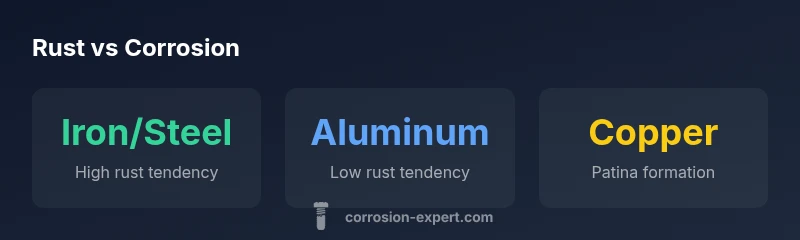
Not all metals rust in the textbook sense. Aluminum forms a thin, protective oxide layer rapidly, shielding the underlying metal from further oxidation. Copper develops a greenish patina that slowly protects it in many environments. Stainless steels resist rust due to a chromium-induced oxide layer, yet crevices or high-chloride environments can cause localized corrosion. Zinc, nickel, and other alloys also show distinct corrosion behaviors. For DIYers, the key takeaway is that material selection matters as much as surface treatment. When choosing outdoor hardware, select metals with proven corrosion resistance for the specific environment.
Environmental factors that accelerate rust formation
Rust progression is not constant; it depends heavily on humidity, temperature, and exposure to salts. Coastal environments with salty air dramatically accelerate rust on iron-based metals. Wet basements, leaky roofs, and condensation cycles provide repeated moisture exposure that sustains rust growth. Seasonal changes—freeze-thaw cycles, rainfall, or snow melt—also wear away protective coatings and promote rust through microcracks. A practical DIY tip is to reduce exposure by sealing, storing metal indoors during wet seasons, and avoiding prolonged contact with salt-rich soils or de-icing chemicals. The environment matters as much as the metal type in determining rust risk.
Prevention strategies: coatings, galvanization, inhibitors, maintenance
Stopping rust starts with preventing moisture from contacting iron. Choose corrosion-resistant materials when possible, and apply protective coatings or galvanization to slow rust. Regular maintenance includes cleaning surfaces, removing salt residues, and inspecting for chips in coatings. Penetrating or sacrificial coatings, polymer paints, and powder coatings offer durable barriers. For marine or salt-heavy environments, consider inhibitors or cathodic protection for critical structures. DIY tips include applying rust-preventive paints, storing tools in dry areas, and reapplying protective finishes after cleaning or rust removal attempts. The goal is to interrupt the moisture-oxygen-iron trio that fuels rust.
When rust isn’t rust: patina, discoloration, and other corrosion forms
Not every reddish-brown film on metal is true rust. Copper and brass develop patinas that are chemically different from iron oxide and often protective. Steel can suffer from pitting and crevice corrosion that isn’t a uniform rust layer. Understanding these distinctions helps DIYers diagnose issues correctly. If you see flaking, scale, or deep pits on iron or steel, rust is likely the cause, and treatment should target coating integrity and moisture control rather than solely cleaning the surface.
Choosing materials for home projects: what to pick and what to avoid
For a home workshop, prioritize low-rust options in outdoor or humid settings. Aluminum and stainless steel provide reliable corrosion resistance in typical environments. Copper offers excellent corrosion resistance in many indoor applications but can corrode in acidic conditions. Cast iron is affordable but requires coating and moisture control. If you must use iron-based hardware outdoors, plan for protective finishes and routine maintenance. This approach minimizes rust risk while balancing cost and performance.
Quick maintenance routines to extend metal life
Establish a simple, repeatable DIY maintenance routine. Wipe surfaces after use, dry thoroughly, and reapply protective coatings as needed. Inspect seasonal exposure areas—gate hinges, nails, gutters, and outdoor furniture—at least twice a year. If you spot early rust, address it immediately with rust converter or light sanding followed by a fresh coat of primer and paint. For critical devices, consider galvanization or protective plating at installation to significantly reduce future rust risk.
Rust tendencies by common metals under outdoor exposure
| Metal Type | Rust Tendency | Notes |
|---|---|---|
| Iron | High | Rust forms quickly in moisture and oxygen |
| Steel | High | Carbon and impurities increase rust risk; stainless steels resist more |
| Cast Iron | High | Porous surface holds water; needs protective coating |
| Aluminum | Low | Forms protective oxide layer; rust not typical |
| Copper | Low | Forms patina; corrosion slow under normal conditions |
| Stainless Steel | Low | Chromium oxide layer provides resistance; watch for crevice corrosion |
Quick Answers
What are metals that rust?
Rust forms on iron-based metals when they are exposed to moisture and oxygen. Other metals corrode differently or form protective oxide layers.
Rust forms on iron-based metals when exposed to moisture and air; other metals corrode differently.
Is stainless steel rust-proof?
Stainless steel resists rust due to chromium; however, under certain conditions like aggressive chemicals or crevices, localized corrosion can occur.
Stainless steel resists rust, but not completely rust-proof in all environments.
Does aluminum rust?
Aluminum does not rust in the classic sense; it forms a protective oxide layer that slows further corrosion.
Aluminum doesn’t rust; it forms a protective oxide layer.
What factors accelerate rust formation?
Moisture, oxygen, sea salt, acids, and temperature fluctuations accelerate rust on iron-based metals.
Moisture and salt speed up rust on iron-based metals.
How can I prevent rust at home?
Keep metal dry, apply protective coatings or galvanization, and perform regular maintenance and cleaning to reduce moisture exposure.
Keep metals dry and coated; maintain them regularly.
Are there rust-free metals for DIY projects?
No metal is completely rust-free under all conditions, but aluminum, copper, and stainless steel offer higher resistance in many environments.
Some metals resist rust better, but none are completely rust-free.
“Rust management hinges on material choice and routine upkeep; even rust-prone metals can last decades with proper protection.”
Quick Summary
- Prioritize iron-based metals for non-rusting performance
- Use protective coatings to dramatically reduce rust risk
- Choose stainless or aluminum alloys in high-moisture environments
- Regular maintenance extends metal life