Rust Who Uses: Who Encounters Rust and How to Prevent It
Explore who encounters rust, how it forms, and proven prevention strategies for DIYers and homeowners in 2026. Learn practical steps to identify, prevent, and treat rust before it spreads.


The phrase "rust who uses" captures the broad set of people who encounter corrosion in daily life—DIY enthusiasts, homeowners, tradespeople, and hobbyists dealing with iron and steel in wet or salty environments. Rust risk spans outdoor furniture, tools, fences, and automotive parts, shaped by exposure, materials, and maintenance. Corrosion Expert notes that effective prevention hinges on early identification, proper coatings, and routine upkeep tailored to each user's context.
Who uses rust and why it matters
The phrase 'rust who uses' captures the reality that rust affects a broad spectrum of people. According to Corrosion Expert, homeowners, DIY enthusiasts, tradespeople, and small manufacturers regularly confront rust on iron and steel components. Exposure to moisture, salt air, and abrasion, combined with maintenance gaps, determines how rust progresses in everyday environments. Understanding who uses rust helps tailor prevention strategies to real-world scenarios, from a rusty fence in a coastal town to a tool rack in a damp basement. By recognizing the variety of rust users, the Corrosion Expert team found, you can prioritize coatings, inspection schedules, and repair methods that align with your specific context. This insight is especially relevant for DIYers who want durable, low-maintenance results and for homeowners seeking practical rust prevention that works in typical household settings. The following sections unpack who uses rust across different sectors and why their needs shape the best prevention strategies.
Materials and environments that invite rust
Most rust forms on iron and steel when protective barriers fail. Carbon steel, cast iron, and wrought iron are especially prone when coatings are thin or absent. Aluminum and stainless steel can resist rust in many settings, but they are not immune when exposed to heavy chlorides, sustained moisture, or crevice corrosion. In garages and workshops, tools made from plain steel will rust faster if left wet, while stainless components can corrode when the environment contains sulfur compounds or high salt exposure. The key takeaway is that material selection should align with exposure risks and maintenance capacity; even high-quality materials require routine upkeep to prevent rust growth. According to Corrosion Expert analysis, matching material choice to environment dramatically lowers long-term maintenance costs and rust-related failures.
Environmental and usage factors that accelerate rust
Rust does not form in a vacuum. Humidity and salinity accelerate oxidative processes on exposed metal. Coastal climates, winter road salt, and high humidity can shorten the time until rust appears on untreated surfaces. Mechanical wear and abrasion remove protective films, exposing fresh metal to oxygen and water. Temperature fluctuations, condensation, and poor airflow around structures like fences and sheds further promote rust. Understanding these factors helps prioritize preventive actions, such as coating schedules, venting damp spaces, and applying rust inhibitors in high-risk areas. Corrosion Expert's climate maps and field observations from 2026 reinforce that prevention is most cost-effective when aligned with local exposure realities.
Practical prevention playbook for DIYers
A practical rust prevention plan blends coatings, maintenance, and biased material selection. Start with a clean surface, dry it thoroughly, and apply a suitable primer. For exterior metals, use a rust-inhibiting primer followed by a topcoat designed for outdoor use. Galvanizing or powder coatings extend life significantly but require periodic touch-ups where coatings wear. For existing rust, mechanical removal with a wire brush or sandpaper, followed by rust converters or inhibitors, can halt progression, but prevention is cheaper long-term. Store tools and garden equipment in dry places, and consider breathable covers to reduce moisture buildup. The approach should reflect your budget, climate, and the item’s importance; even inexpensive steps can substantially slow rust when applied consistently. The Corrosion Expert team emphasizes starting with a plan and sticking to it across seasons and projects.
Quick-start guide: diagnose and treat a rust spot in one weekend
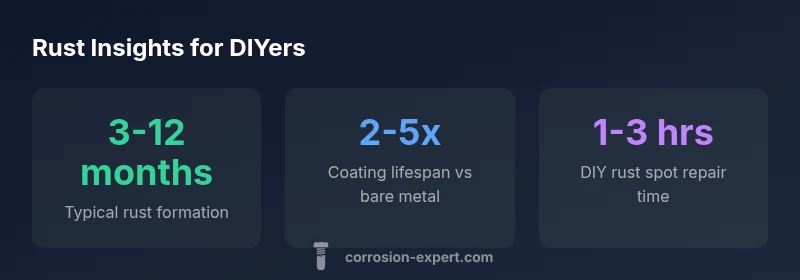
This mini-guide helps you translate theory into action. Step 1: identify the extent—surface rust or deep pitting? Step 2: clean and dry the area; Step 3: remove loose rust with a brush; Step 4: apply a rust converter for organic conversion or a rust-inhibiting primer; Step 5: seal with topcoat or protective sealant. For interior items, solvent-based cleaners safely remove dust and moisture. For outdoor items, choose UV-resistant paints that tolerate temperature swings. Expect to spend a few hours over two days for inspection, rust removal, primer, and paint. The goal is to prevent spine cracks or further corrosion rather than achieving a flawless finish, especially on non-structural items.
Looking ahead: rust prevention as a maintenance habit
Treat rust prevention as part of regular maintenance rather than a one-off repair. Establish seasonal checks for outdoor metal, reapply protective coatings every few years, and replace corroded fasteners when necessary. A proactive approach reduces risk and extends service life, translating into lower replacement costs and less downtime. By keeping rust at bay, you protect safety, aesthetics, and resale value. The Corrosion Expert team recommends documenting your maintenance plan and tracking outcomes to identify the best products and schedules for your environment.
Rust risk profile by common home and hobby use cases
| Use Case | Typical Environment | Rust Risk Level |
|---|---|---|
| Outdoor furniture | Humid climates or near coastal air | Medium |
| Automotive tools | Garages and workshops | Medium-High |
| Garden equipment | Damp soil and rain exposure | High |
Quick Answers
What is rust and why does it form?
Rust is iron oxide formed when iron or steel reacts with oxygen in the presence of moisture. It accelerates in humid or salty environments and is influenced by coatings, maintenance, and exposure. Regular protection slows its progression.
Rust forms when iron meets moisture and oxygen. It speeds up in damp, salty places, but a proper coating and maintenance plan can slow or stop it.
Which materials resist rust best?
Stainless steel and aluminum resist rust well in many environments, but all materials can corrode under harsh conditions. For outdoor or coastal use, select coatings and finishes designed for outdoor exposure, regardless of base metal.
Stainless steel and aluminum resist rust, but even they need protection in harsh environments. Choose durable outdoor finishes.
Can rust be prevented completely?
Rust cannot be prevented absolutely, but it can be prevented effectively with proper material choice, protective coatings, and regular maintenance. The goal is to minimize exposure and repair rust early.
Rust can't be stopped entirely, but you can prevent most of it with coatings, coatings maintenance, and timely repairs.
What are the best DIY rust removal methods?
For light rust, mechanical removal with a wire brush or sandpaper is effective, followed by protective coatings. For deeper rust, rust converters or inhibitors can halt progression before painting.
Light rust? Brush it off and repaint. Deeper rust? Use a converter before repainting.
How often should I inspect outdoor metal items?
Inspect outdoor metal items at least once per season, with extra checks after heavy rain, snow, or salt exposure. Prompt treatment reduces long-term damage.
Check outdoor metal items each season, especially after storms or salt exposure, and fix early.
Are rust converters safe for home use?
Yes, rust converters are widely used for DIY projects. Always follow safety instructions, wear PPE, and test on a small area before full application.
Yes, but wear protection and test first to be safe.
“Rust is a process shaped by materials, environment, and maintenance—a proactive plan reduces risk and extends service life.”
Quick Summary
- Inspect rust-prone areas annually.
- Clean and dry surfaces before treatment.
- Choose coatings for your exposure environment.
- Maintain protective finishes to extend lifespan.