Rust for Noobs: Beginner's Guide to Rust Basics & Tools
A practical, step-by-step guide for beginners learning rust basics, how rust forms, removal and prevention tips, and safe DIY fixes. From Corrosion Expert.


You will learn how to identify rust, select safe removal methods, and prevent recurrence on common household metals. This beginner guide covers essential tools, protective gear, and simple techniques you can perform safely in a typical garage or workshop. By the end, you’ll be able to tackle rust with confidence, using a steady, repeatable process.
What rust is and how it forms
Rust is a form of iron oxide that occurs when iron, steel, or cast iron is exposed to moisture and oxygen over time. It begins as a small red-brown film on the surface and can progress into flaky patches that weaken metal and stain nearby surfaces. For the DIY enthusiast, understanding rust is the first step in preventing damage and extending the life of tools, hardware, and outdoor metalwork. In this guide to rust for noobs, we’ll cover how rust forms, how to recognize early signs, and practical, non-technical steps you can take at home. Remember: corrosion happens slowly, but small neglects compound over months and seasons. The Corrosion Expert team notes that early intervention saves time, money, and headaches later on.
Oxygen diffusion, moisture, salts, and protective coatings influence the rate. In humid climates or coastal environments, rust can advance rapidly. Certain metals like mild steel are more susceptible than stainless steel, which forms a protective chromium oxide layer. Yet even stainless steel can rust under certain conditions. The key is to catch early warning signs—discoloration, staining, rough texture, or tiny pits—before perforation occurs. As you practice rust for noobs, develop a routine: inspect metal surfaces regularly, wipe away moisture, and store items in dry locations. The underlying chemistry is useful to know, but you don’t need a chemistry degree to manage rust effectively. In this article, we’ll translate science into simple, actionable steps that work in real garages and basements.
How to assess rust on your metal surfaces
Before you grab sandpaper, take a moment to evaluate how bad the rust is. Distinguish surface rust, which sits on top and is relatively easy to remove, from deeper corrosion that bites into the metal and can compromise strength. A simple test is to rub a small, inconspicuous area with a light scuffing pad or wire brush. If the rust comes off easily and the metal still looks intact, you’re dealing with surface rust. If you uncover dark pits, flaky layers, or a dull, weak spot, it may be time to consider more aggressive treatment or replacement. For The Corrosion Expert, developing a methodical assessment is a core habit for rust for noobs. Mark the area, note its extent, and plan a safe remediation path. Always protect nearby surfaces and keep a clean workspace so you don’t spread rust to untouched areas. Document improvements after each step to measure progress over days and weeks.
Essential tools and safety gear
Working with rust involves physical scrubbing, small metal shavings, and possibly fumes from chemical treatments. That makes PPE and proper tools essential. At minimum you should have: safety goggles, nitrile gloves, a dust mask or respirator, and a sturdy wire brush. For mechanical steps, keep sandpaper (60-120 grit), steel wool, and non-scratch scouring pads handy. A degreaser or isopropyl alcohol helps clean surfaces before you work. If you plan to finish by painting, you’ll want a primer and compatible topcoat. Keep a drop cloth and painter’s tape to protect adjacent areas. Organize your tools before you start so you can work efficiently and avoid re-cleaning surfaces.
Safety note: always work in a well-ventilated area when using chemical rust removers, and never mix cleaners with bleach or ammonia. Corrosion prevention relies on safe handling as much as on technique. If you’re unsure about any product, perform a small test patch first and consult product instructions. Your goal is a controlled, repeatable process that you can repeat on multiple projects.
Step-by-step rust removal for beginners
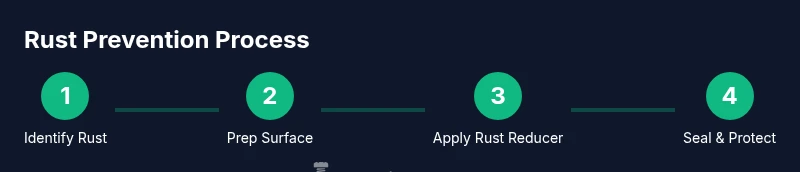
Tackle rust with a simple, repeatable routine that you can apply to most household metal items. Start by cleaning the surface with a degreaser to remove oils and dirt, then dry thoroughly. Use a stiff wire brush to remove loose rust, then switch to finer sandpaper or steel wool to smooth the area. If deeper rust remains, apply a rust converter or a beginner-friendly rust remover according to the product’s directions, taking care to protect skin and eyes. After the rust is removed, wipe the area with isopropyl alcohol and let it dry completely before priming. Finally, apply a coat of primer and your chosen paint or sealant to lock in the repair. This method emphasizes safety, simplicity, and repeatability, so you can build confidence with each project.
Rust prevention and maintenance
Prevention is cheaper and simpler than repeated rust removal. After your repair is dry, apply a protective coating to seal out moisture. Use a rust-inhibiting primer, then a topcoat appropriate for the metal and environment. For indoor use, a standard rust-inhibiting primer and enamel paint can suffice; for outdoor items, consider a weatherproof sealant or corrosion-resistant coating. Regular maintenance helps too: wipe surfaces dry after use, store items in a dry space, and inspect surfaces every few months. If you live near salt air or in high humidity, schedule periodic touch-ups to defend against slow, relentless corrosion. By following these steps, rust for noobs becomes a repeatable, confidence-building routine rather than a daunting challenge.
Common mistakes and quick wins
Common mistakes include skipping the prep work (dirt and oil trap moisture), using too-light grit sandpaper that leaves rusty fuzz, and skipping primer after removal. A quick win is to focus on the most exposed areas first—edges, joints, and corners that trap moisture. Always work from clean, dry surfaces and avoid letting metal stay wet. Keep a tidy workspace to prevent re-contamination of cleaned areas, and label treated zones so you can monitor progress over time. By learning from these common missteps, rust for noobs becomes a straightforward maintenance habit rather than a problem you dread.
Tools & Materials
- Safety goggles(Impact-resistant, ANSI Z87.1.)
- Nitrile gloves(Chemically resistant; choose 4-6 mil for dexterity.)
- Dust mask or respirator(N95 or better; use organic vapor cartridge if using solvents.)
- Wire brush(Stiff-bristle brush for removing loose rust.)
- Sandpaper (60-120 grit)(Start coarse, finish with finer grit for smoothness.)
- Steel wool(Grade medium for final pass.)
- Non-scratch scouring pads(For delicate surfaces to avoid gouging.)
- Putty knife(Helpful for lifting flaking rust in crevices.)
- Degreaser or isopropyl alcohol(Pre-clean to remove oils and residues.)
- Rust converter (optional for deep pits)(Converts remaining rust to a stable compound.)
- Primer and topcoat paint(Choose rust-inhibiting primer and compatible paint.)
- Drop cloth and painter's tape(Protect surrounding areas during painting.)
Steps
Estimated time: 60-90 minutes
- 1
Assess workspace safety and PPE
Set up a well-ventilated area and don safety goggles, nitrile gloves, and a mask. Identify the area to repair and plan your approach. This foundational step reduces accidents and creates a repeatable process.
Tip: Always prepare a clean, stable work surface before starting. - 2
Clean and degrease the surface
Wipe the metal with a degreaser or isopropyl alcohol to remove oil and dirt. Dry completely to prevent moisture from reinvigorating rust during the process.
Tip: A dry surface dramatically improves adhesion for primers. - 3
Remove loose rust with a wire brush
Scrub the area with a stiff wire brush to lift loose rust and scale. Move in one direction to avoid embedding fragments into the metal. Repeat until the surface looks even and dull metal is exposed.
Tip: Avoid over-scrubbing; you want to remove surface rust, not create new pits. - 4
Sand to smooth the surface
Use 60-120 grit sandpaper to smooth the area and remove residual rust. Progress to a finer grit to achieve a uniform finish. This step creates a good bonding surface for primers.
Tip: Finish with a light wipe of alcohol to remove dust before priming. - 5
Apply rust converter or remover (if needed)
For stubborn pits, apply a rust converter following the product instructions. It neutralizes residual rust and stabilizes the surface for painting.
Tip: Only use if you’re comfortable with chemical products and follow disposal guidelines. - 6
Prime and paint
Apply a rust-inhibiting primer in a thin, even coat. Once dry, apply a compatible topcoat for outdoor or indoor use. Multiple thin coats are better than one thick coat.
Tip: Ventilate well and allow complete cure between coats. - 7
Inspect and maintain
Check the repaired area after 24 hours and again after a few weeks. Reapply primer or paint as needed, especially in high-humidity environments.
Tip: Set a reminder to recoat annually for outdoor items.
Quick Answers
What is rust and how does it form?
Rust is iron oxide formed when iron reacts with moisture and oxygen. It weakens metal over time and can spread if left untreated.
Rust is iron oxide that forms when iron meets water and air, gradually weakening metal.
Is rust removal safe for DIY beginners?
Yes, with proper PPE, careful handling of cleaners, and following product instructions. Start with surface rust and avoid harsh chemicals on delicate surfaces.
Yes, with safety gear and simple methods, beginners can remove rust safely.
Can rust be prevented?
Yes. Keep metal dry, apply rust-inhibiting primers, and seal with appropriate paint or coatings. Regular maintenance reduces future rust.
Absolutely—dry storage and protective coatings prevent rust from forming.
Should I remove rust from galvanized metal?
Galvanized steel resists rust but can corrode if the zinc coat is damaged. Use milder methods for bare spots and protect with a suitable coating afterward.
Galvanized metal can rust if the coating is damaged; treat gently and coat afterward.
Do I need professional help for large rust repairs?
For extensive structural rust or safety-critical parts, consult a professional. Small home projects are a good starting point for beginners.
For big structural rust, seek professional help; for small jobs, DIY is fine.
What tools are essential for beginners?
Basic brushes, sandpaper, degreaser, and safety PPE are enough to start. Add rust converters and primer as you gain confidence.
Start with basic brushes, sandpaper, degreaser, and PPE.
Watch Video
Quick Summary
- Identify rust early to save time and money.
- Use proper PPE and safe, beginner-friendly methods.
- Prepare, not rush: dirt and moisture ruin coatings.
- A thin, even primer plus topcoat yields durable results.