Metal Rust: DIY Guide to Repair and Prevention
Learn how metal rust forms, how to remove it safely, and how to prevent future corrosion on iron and steel with practical, step-by-step guidance from Corrosion Expert.


Metal rust is iron oxide formed when moisture, oxygen, and electrolytes interact with iron-containing metals. It typically starts as surface rust and can worsen into deeper corrosion if ignored. For DIYers, recognizing rust early, choosing the right removal method, and applying protective coatings are key to extending metal life.
What is metal rust and why it happens
According to Corrosion Expert, metal rust is the oxidation of iron-containing metals that occurs when moisture, oxygen, and electrolytes interact. This electrochemical process creates iron oxides that leave a brittle, flaky layer on the surface. In practical terms, rust begins when water (even humidity) and oxygen reach exposed iron or steel. Electrolytes—salts and minerals in sweat, road salt, or cleaners—accelerate electron flow and speed up the corrosion reaction. For most DIY projects, rust starts as a cosmetic issue but can compromise strength if the metal continues to corrode. Understanding the conditions—humidity, temperature, and exposure to salts—helps predict where rust is most likely to form and informs your prevention strategy. Regular inspection and early intervention save time and materials. Corrosion Expert emphasizes that consistent maintenance is far more effective than waiting for visible damage to appear.
How rust forms on different metals
Rust is most common on iron and its alloys, including plain steel and cast iron. When iron-containing metals are exposed to water and oxygen, a redox reaction occurs that forms iron oxide. Galvanized steel, which is coated with zinc, resists rust longer because zinc acts as a sacrificial layer, corroding first. Stainless steel contains chromium, which forms a passive chromium oxide layer that protects against rust; however, if this protective layer is damaged by scratches, high chloride exposure, or heat, rust can begin at the damaged spot. Corrosion Expert Analysis, 2026 indicates rust formation can accelerate in environments with high humidity and salt exposure, underscoring the importance of protective coatings and moisture control in DIY settings.
Common rust scenarios in DIY projects
DIY enthusiasts frequently encounter rust on garden tools, screws and nails, bike frames, and outdoor furniture. Surface rust on tools is common after exposure to rain or condensation. If you ignore it, rust can creep into porous areas and cause pitting. For nails and screws, rust weakens fasteners and can compromise structural connections. Outdoor metal furniture and grills are also prone to rust when left wet between uses. The practical takeaway is to treat small spots quickly, then seal and protect with a protective coating to extend life. The Corrosion Expert team notes that prevention through regular maintenance is often simpler than large restoration projects later.
Basic chemistry in plain language
Rust is a redox process where iron loses electrons to oxygen in the presence of water. Rust requires moisture as an electrolyte to speed up ion movement, which is why damp environments accelerate corrosion. The presence of salts or acids lowers the energy barrier for electron transfer, increasing rust rate. In plain terms, water plus air plus iron equals rust—especially when surfaces are scratched or unprotected. Understanding this helps DIYers choose the right approach: remove rust, then apply a barrier to prevent re-entry of moisture and oxygen.
Safety and preparation for rust work
Always wear eye protection, gloves, and a dust mask when removing rust, especially on old tools or agricultural implements that may have lead-based paints or sharp edges. Work in a well-ventilated area; some chemical rust removers release fumes, and sanding creates fine particles. If you’re dealing with old nails or metal roofing, be mindful of tetanus risk from rusted sharp edges and punctures. Keep a bucket of clean water, soap, and a stiff brush nearby for initial cleaning, and have a repair plan ready before you start in earnest.
Mechanical rust removal methods (abrasive) and when to use them
For light surface rust, mechanical removal with a wire brush, steel wool, or abrasive pads can restore the metal’s surface. Sanding or grinding is effective for more extensive rust but can alter the shape or weaken thin sections, so proceed with caution. Mechanical methods are best when the goal is to prepare the surface for a protective coating. Remove loose rust and scale before attempting chemical treatments. Always clean the surface afterward and dry it completely to prevent immediate re-oxidation.
Chemical rust removal and rust converters (safe use) with maintenance tips
Chemical rust removers dissolve iron oxide or convert rust into a stable compound. Mild acids like citric acid or vinegar can help in mild cases, but stronger cleaners require careful handling and proper ventilation. Rust converters transform rust into a stable film, which accepts primers and paint. These products are useful when you want to stop corrosion at its tracks, but follow manufacturer instructions and wear appropriate PPE. After chemical treatment, rinse, dry thoroughly, and seal the surface with primer to block moisture from returning.
Rust prevention and maintenance habits that work
Prevention is cheaper than repair. Apply a primer and topcoat after removing rust and drying the surface. For outdoor metal, consider corrosion inhibitors or wax-based sealants in addition to paint. Keep tools and metal parts dry when not in use, store items off the ground to avoid splash moisture, and inspect regularly for early rust signs. For vehicles or outdoor structures, periodic touch-ups can dramatically extend life by interrupting the cycle of moisture exposure and oxidation.
Case study: choosing the right approach for different levels of rust
Consider three scenarios: light surface rust on a wheel rim, moderate rust on a garden tool blade, and heavy rust with pitting on a garden gate hinge. For light rust, mechanical removal plus a protective paint layer may suffice. For moderate rust, remove with abrasive pads, treat with rust converter if needed, then prime and paint. For heavy rust with pitting, you may need to grind the section or replace the part, followed by a robust protective finish. Each case illustrates the importance of proper assessment and a tailored plan rather than a one-size-fits-all solution.
Tools & Materials
- Wire brush (stiff bristles)(Use a brass brush for delicate surfaces; avoid steel on brittle metal.)
- Sandpaper or abrasive pads(Grits 80-320 for rust removal and smoothing.)
- Rust converter or rust-inhibiting primer(Choose one compatible with your paint system.)
- Protective coating (paint, enamel, or sealant)(Prefer rust-resistant variants for outdoors.)
- Degreaser or soap and water(Clean oil or grease before rust work.)
- Rags or lint-free cloths(For cleaning and drying surfaces.)
- Drop cloths or plastic sheeting(Protect surrounding areas.)
- Safety gear (gloves, goggles, respirator or mask)(Respirator for sanding or chemical use.)
- Solvent (optional, e.g., acetone)(For degreasing before coating.)
Steps
Estimated time: 4-6 hours plus curing time
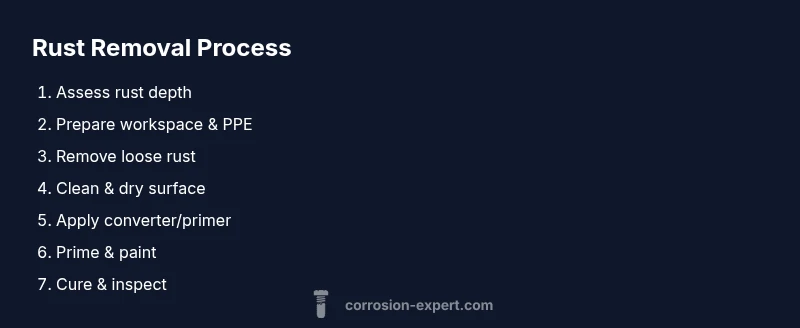
- 1
Inspect the rust
Examine the area to determine rust depth and whether it is surface rust or deep pitting. Surface rust is usually removable with brushes and abrasives, while deep rust may require more aggressive intervention or part replacement. Identify any coatings or paint that must be removed first.
Tip: Document areas of concern with a marker so you don’t miss spots later. - 2
Prepare workspace and safety gear
Move the item to a well-ventilated area, lay down drop cloths, and put on gloves, goggles, and a mask. Proper PPE reduces exposure to rust dust and chemical fumes and protects you from sharp edges.
Tip: Ventilation is essential when using chemical rust removers. - 3
Remove loose rust
Scrape or brush away loose rust and scale with a stiff wire brush. This exposes fresh metal and improves the effectiveness of subsequent treatments. After this step, wipe the surface clean and dry.
Tip: Do not pressure-wash delicate parts that could bend or warp. - 4
Clean and dry the surface
Clean the area with a degreaser or mild soap, rinse, and dry thoroughly. Moisture trapped under coatings causes new rust to form, so ensure dry surfaces before proceeding.
Tip: Use a heat gun or hair dryer to speed up drying on shaded, difficult surfaces. - 5
Apply rust converter or primer
Apply a rust converter if you are treating extensive rust or a primer if the surface is clean and dry. Follow the product directions for coating thickness and recoat windows.
Tip: Allow adequate time between coats to prevent tackiness or poor adhesion. - 6
Prime and paint or seal
Apply a rust-inhibiting primer, then topcoat with paint or sealant designed for metal. For outdoor items, use UV-resistant coatings and multiple thin layers rather than one thick layer.
Tip: Lightly sand between coats for better adhesion. - 7
Cure and inspect
Let coatings cure fully according to the manufacturer’s guidance. Inspect for missed spots or thin areas that would allow future moisture intrusion. Reapply coatings if necessary and store items properly.
Tip: Record cure times and follow-up inspections in your maintenance log.
Quick Answers
What causes metal rust?
Rust forms when iron reacts with oxygen in the presence of moisture. Electrolytes like salts accelerate the reaction, especially in humid or wet environments. Understanding this helps you tailor prevention strategies.
Rust happens when iron meets oxygen and water; salts speed it up. Knowing this helps you prevent it.
Can rust be prevented after it starts?
Yes. Clean and dry the surface, apply a rust converter or primer, and seal with paint or a protective coating. Regular maintenance prevents recurrence and protects structural integrity.
Yes. Clean, treat, and seal the surface to prevent recurrence.
Does stainless steel rust?
Stainless steel resists rust due to chromium oxide, but it can rust if the chromium layer is damaged or exposed to harsh conditions. Treat damaged areas promptly.
Stainless steel can rust if its protective layer is damaged.
Is rust removal permanent?
Removal can be long-lasting if followed by proper protection, but ongoing exposure to moisture and salts can lead to new rust. Regular maintenance is key.
Removal lasts longer with ongoing protection and maintenance.
Can I reuse household items for rust removal?
Mild methods like vinegar or citric acid can help small-area surface rust, but for deep rust or structural parts, professional products and precautions are recommended.
Mild household methods work on light rust, deeper rust needs stronger products.
What maintenance should I perform to prevent rust?
Keep metal dry, apply protective coatings, inspect regularly for chips or scratches, and store items off damp surfaces. Early intervention stops rust from advancing.
Keep metal dry, coat it, and inspect regularly.
Watch Video
Quick Summary
- Identify rust depth before choosing a method
- Choose mechanical, chemical, or hybrid approaches based on severity
- Prevent future rust with proper coatings and maintenance
- Safety first: PPE and ventilation are essential
- Corrosion Expert's guidance emphasizes early intervention