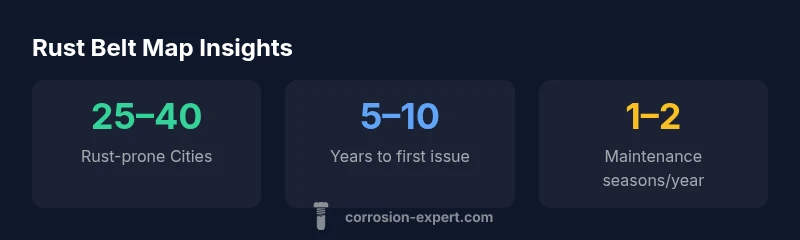
Map of Rust Belt: Regional Patterns, Risks, and Prevention
Explore how a map of the rust belt reveals regional corrosion patterns, guiding homeowners and DIYers in prevention, maintenance, and cost-aware rust removal.


A map of the rust belt highlights regions where aging infrastructure, heavy industry, and climate increase corrosion risk. It helps homeowners and DIYers locate high-priority areas for inspection, rust prevention, and targeted maintenance. By tracing historical industrial activity alongside moisture and road-salt exposure, the map becomes a practical planning tool rather than a decorative graphic.
Understanding the map of the rust belt
A map of the rust belt is more than a list of cities; it combines historical industrial footprints, current aging infrastructure, climate patterns, and maintenance histories to illustrate where corrosion challenges cluster. For a homeowner, this map is a practical planning tool that helps prioritize inspections of girders, railings, basements, and outdoor aggregates in regions where humidity meets road salt. The term 'rust belt' originated from the concentration of heavy industry along the Great Lakes and Atlantic corridor and has evolved to describe statistical risk rather than a fixed boundary. According to Corrosion Expert, the value of the map lies in translating large-scale patterns into actionable tasks for a typical house, shed, or deck. Reading the map with a DIY mindset means looking beyond colors and borders to understand exposure: which climates experience freeze-thaw cycles, which cities rely on de-icers, and which industrial corridors show longer service life for protective coatings. Homeowners can use these clues to plan seasonal inspections and budget for rust-prevention products before the worst weather arrives.
Reading the rust belt map: legend and interpretation
Effective use of a map of the rust belt starts with understanding its legend. Typically, color bands indicate projected corrosion risk, while markers show known problem sites such as bridges, rail lines, and utility conduits. Time-based overlays may reveal shifts in risk over a decade, highlighting how aging infrastructure and climate change interact with maintenance funding. For DIYers, prioritize zones where salt exposure and humidity converge with older construction practices. This means paying attention to doors, thresholds, outdoor metal railings, and structural fasteners in high-risk areas. The Corrosion Expert team emphasizes that the map should drive action, not stagnation—use it to schedule inspections, allocate budget, and select rust-prevention products with proven adherence to your climate and exposure.
Regional patterns and drivers of corrosion
Regional patterns on a rust belt map reflect a mix of climate, industry history, and municipal upkeep. The Great Lakes region, for example, often shows higher humidity and heavier road-salt use in winter, which accelerates corrosion on exposed steel. In the Mid-Atlantic belt, coastal moisture and older infrastructure can create persistent damp environments that foster rust at joints and fasteners. The Upper Midwest presents a different mix: extreme cold, freeze-thaw cycles, and de-icing chemicals that corrode paint and primers. Understanding these drivers helps DIYers tailor prevention plans: choose coatings that resist salt spray, seal vulnerable seams, and monitor drainage paths that direct water toward metal surfaces. The takeaway is simple—regional context matters when choosing products and scheduling maintenance.
Practical prevention and maintenance steps
Implementing prevention based on a map of the rust belt starts with an inspection cadence. For most homes, an annual look at exterior metal fixtures, railings, and low-lying gutters is sensible, with more frequent checks in higher-risk zones. Use a reputable rust converter to stabilize tiny rust spots before applying a primer and topcoat; in salt-prone areas, consider zinc-rich primers for enhanced adhesion. Regular cleaning to remove salt residue and moisture buildup makes coatings last longer. If structural metal shows deep pitting or flaking, replace affected components or consult a pro. Save money by targeting high-risk joints rather than treating every surface, and document each maintenance event to track improvements over time. Remember, prevention pays off, especially in rust-prone climates mapped by regional data.
Data sources and limitations of rust belt maps
Maps of the rust belt synthesize multiple data streams: climate normals, historical industrial layouts, and maintenance records. While they provide a strong guide, maps have limitations. Data gaps can occur in rural pockets or smaller municipalities, and recent infrastructure changes may outpace updates. For homeowners, use maps as a planning tool rather than a definitive forecast. Cross-reference with local weather patterns, municipal maintenance schedules, and recent building permits to confirm risk areas. The combination of map insights and on-site evaluation yields the best results for long-term protection against rust.
Case study: applying the map to a DIY home project
Consider a mid-sized home in a high-risk rust belt zone near a salt-prone corridor. Using the map, the homeowner identifies door thresholds, railings, and the porch floor as priority areas. They schedule a spring inspection, remove loose paint, and apply a rust converter followed by a rust-inhibiting primer and a solid topcoat. They replace a corroded fastener and seal joints with a flexible sealant designed for exterior metal. Over two seasons, they monitor results and document color retention and surface cleanliness. The map guided a focused approach that saved time and reduced overall maintenance costs while extending the life of critical metalwork.
How municipal data complements homeowner maps
Municipal data—such as street-level drainage plans, road-salt usage reports, and aging infrastructure inventories—complements homeowner maps by providing context for where corrosion risk is highest within a given neighborhood. DIYers should review public works PDFs and planning documents to identify areas with known decay or planned upgrades. When combined with your personal observations, municipal data helps you anticipate maintenance needs, forecast budgets, and avoid reactive repairs.
Next steps for DIY enthusiasts
If you are new to using a map of the rust belt, start with a simple action plan: 1) locate your property on a regional rust belt map; 2) identify exposed metal surfaces near water, salt exposure, or humidity; 3) perform a basic inspection and note any paint loss or rust spots; 4) select rust-preventive products suited to your climate; 5) schedule a maintenance calendar and track progress. Over time, this proactive approach builds resilience against corrosion and keeps metal components safe, functional, and visually appealing.
Examples of rust-prone regions on the map of the rust belt
| Region | Typical Rust Indicators | Recommended Action |
|---|---|---|
| Great Lakes Corridor | High humidity, road salt exposure, visible corrosion | Annual inspections; protective coatings; curb drainage improvements |
| Mid-Atlantic Industrial Belt | Moisture-prone, industrial byproducts | Seal joints; use rust inhibitors; monitor drainage |
| Upper Midwest Urban Areas | Cold climate with de-icers | Increase coatings; replace corroded fasteners; galvanize where possible |
Quick Answers
What is the rust belt, and how does it relate to a map?
The rust belt refers to regions with a legacy of heavy industry and aging infrastructure. A map of the rust belt shows where corrosion risk concentrates, helping homeowners plan inspections, coatings, and timely rust removal. It translates broad patterns into practical maintenance steps.
The rust belt is a region with industrial legacy and aging metalwork. A map of it helps you spot where corrosion risks cluster and plan repairs.
What data sources are best for identifying rust-prone areas?
Use climate data, historic industrial maps, and maintenance records from municipal sources. Cross-reference these with on-site inspections to validate risk areas. Corrosion Expert recommends integrating public data with your own observations.
Look for climate data and old industrial maps, then verify with your own home inspection.
How often should homeowners review the rust belt map?
Review your map annually, especially before spring and fall maintenance windows. Update notes after major weather events or renovations that affect drainage or protective coatings.
Check it once a year and after big weather changes.
Can I DIY treat rust with household products?
Basic rust prevention can be DIY with rust converters, primers, and topcoats. For structural metal with deep pits, consider professional assessment. Always follow product instructions and test in a small area first.
Yes, for minor spots you can DIY, but deep corrosion should be assessed by a pro.
Are there government resources for rust prevention?
Many city and state DOTs, environmental agencies, and extension services publish guidelines on corrosion prevention and maintenance. Check local government sites for up-to-date recommendations and-approved products.
Local government sites often have rust prevention guides and product recommendations.
“A map of rust belt regions isn't just geography; it's a practical tool that guides DIYers to where corrosion concerns cluster and where prevention yields the best returns.”
Quick Summary
- Identify rust-prone regions using your map and local climate.
- Prioritize prevention during spring and fall maintenance cycles.
- Choose coatings and inhibitors suited to climate exposure.
- Inspect salt-exposed joints, thresholds, and fasteners regularly.
- Use community data to plan safe, cost-effective rust removal.