Is It Rust Console BP Wipe? A Real-World Rust Care Guide
Clarify the search term is it rust console bp wipe with practical guidance on real-world rust removal and prevention for DIY enthusiasts and homeowners.


The direct answer is that there is no real-world operation called a BP wipe for rust. If you’re dealing with corrosion on metal, rust issues are addressed through cleaning, rust converters, coatings, and proactive maintenance rather than a single wipe command. In gaming contexts, “BP wipe” refers to resetting blueprints in the Rust game, not real metal corrosion.
Is It Rust Console BP Wipe? Clarifying the Search
If you searched for the phrase is it rust console bp wipe, you’re likely mixing terminology from a video game with real-world rust care. In the gaming community, a BP wipe refers to resetting blueprints in the game Rust; this has no effect on physical metal or corrosion on your tools, car frame, or household items. According to Corrosion Expert, it’s important to differentiate gaming jargon from DIY maintenance advice. Real rust is a chemical process where iron reacts with water and oxygen to form iron oxide; there is no single ‘wipe’ that fixes it. To actually stop rust from spreading on surfaces you own, you’ll rely on a process of cleaning, stabilization, and protective sealing, not a console command.
The Corrosion Expert team found that homeowners often search broad phrases like this when trying to solve a tangible rust problem. This article will focus on practical, real-world rust care that you can perform in a garage or workshop, using proven steps and safe products. By sticking to corrosion science—rather than gaming terms—you’ll get durable results and avoid costly missteps.
Real-World Rust: Causes and What Wipes Can and Can't Do
Rust forms when iron or steel is exposed to moisture and oxygen. The rate and severity depend on factors like humidity, salinity, and the presence of protective coatings. A physical wipe can remove loose surface rust, but it won’t reverse deep staining or restore material integrity if the rust has penetrated the substrate. Chemical rust removers can help dissolve oxides, while rust converters stabilize rust by turning it into a protective layer. Preventive measures—like drying after use, applying a sealant, and storing items in low-humidity spaces—are essential for long-term durability. In practice, you’ll typically combine cleaning, chemical treatment, and sealing to prevent recurrence. Corrosion Expert analysis shows that addressing rust early yields the best long-term value, especially on tools, hardware, and exterior metal.
Step-By-Step: Safe, Effective Rust Removal and Prevention
- Assess the rust severity: light surface rust vs. deep pitting. 2. Clean the area with soap and water; dry thoroughly. 3. Choose a method: mechanical scrubbing for light rust, chemical rust remover or rust converter for deeper cases. 4. Apply the chosen product following the label directions. 5. Rinse off and dry completely; inspect for remaining spots. 6. Apply a protective coating (primer + paint, oil, or corrosion inhibitor) to block moisture. 7. Reassess and recoat as needed every few years.
This process reduces the chance of re-oxidation and extends the life of metal parts, tools, and surfaces.
Household Methods: What Really Works (and What to Avoid)
- Vinegar soak or lemon juice can help loosen light rust on small items; rinse and dry fully after treatment.
- Baking soda paste provides gentle abrasion for light rust when combined with water.
- Commercial rust removers with chelants are more effective on stubborn spots; follow safety instructions.
- Avoid mixing bleach with acidic cleaners; it can release hazardous gases and damage coatings.
- Do not rely on a single wipe—consistency and follow-up protection are key.
These options can be useful for quick fixes, but deeper rust or structural concerns often require professional-grade products or coatings.
Maintenance Habits to Prevent Rust on Home Items
Preventing rust is more cost-effective than removing it. Keep items dry and store them in a low-humidity area. After cleaning, apply a protective layer—oil for tools, sealant or primer/paint for outdoor surfaces, and rust inhibitors where appropriate. Inspect stored metal objects every few months for early signs of rust and reapply protective coatings as needed. Ventilation and drainage in garages and sheds reduce moisture buildup, further lowering rust risk.
When to Call a Pro: Signs You Need Professional Help
If rust has caused deep pitting, thinning of metal, or structural damage, or if coatings fail repeatedly despite maintenance, consult a professional. Early consultation can save money and extend the life of critical components like vehicle frames, structural iron, or architectural metalwork. A corrosion expert can assess substrate integrity and recommend appropriate treatments, coatings, and ongoing maintenance plans.
Myth-Busting: Debunking Common Rust Myths
- Myth: Rust can be permanently removed with a single wipe. Truth: Real rust often requires ongoing maintenance and protective coatings. 2) Myth: Any acid will remove rust quickly. Truth: Harsh acids can damage the base metal and coatings. 3) Myth: Once rust-free, you’re done. Truth: Ongoing prevention is essential in moist environments.
Quick Reference: Tools and Materials for DIY Rust Care
- Protective gloves and eye protection
- Wire brush or steel wool for light rust
- Plastic scrapers for delicate surfaces
- Rust remover or converter (follow label directions)
- Primer/paint or protective coating (oil, wax, or sealant)
- Clean rags and mineral spirits for cleanup
Rust issues and recommended treatments by item type
| Item Type | Rust Issue | Recommended Treatment |
|---|---|---|
| Garden tools | Light surface rust | Sodium bicarbonate scrub + oil |
| Cast iron skillet | Moderate rust | Gentle scrub + mineral oil |
| Steel fasteners | Deep rust | Rust converter + primer/paint |
Quick Answers
Is rust dangerous to handle?
Rust itself is not highly dangerous, but sharp edges and exposure to iron oxide can cause cuts or skin irritation. Wear gloves, work in a ventilated area, and wash surfaces after handling.
Rust can cause cuts; wear gloves and wash up after handling.
Can I remove rust at home completely?
Many surface rust problems can be reduced or removed at home with mechanical scrubbing, rust removers, or rust converters. Deep pits or structural corrosion may require professional treatment.
You can usually treat surface rust at home, but deep rust may need a pro.
What household items work best for rust removal?
Vinegar, lemon juice, and baking soda can help with light rust. For tougher rust, use chelating rust removers or converters designed for your material, following safety directions.
Vinegar or lemon juice helps with light rust; for tougher rust use a converter.
Will rust come back after treatment?
If moisture returns or protective coatings break down, rust can recur. Ongoing maintenance, proper ventilation, and resealing surfaces reduce recurrence risk.
Keep moisture low and recoat when needed to prevent return.
How long does a protective coating last?
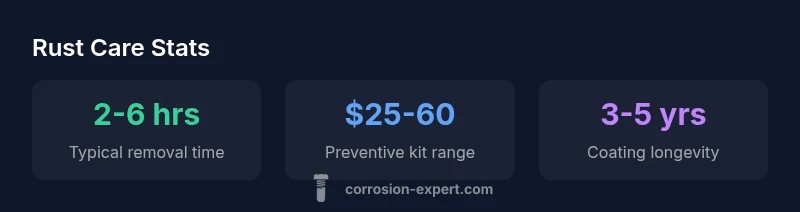
Protective coatings typically last several years with proper maintenance and periodic reapplication when signs of wear appear.
A good coating lasts years with upkeep.
“"Rust doesn’t disappear on its own; it either stops spreading with proper treatment or recurs without ongoing care."”
Quick Summary
- Start rust care early to prevent spread.
- Use a multi-step process rather than a single wipe.
- Choose coatings that suit the item and environment.
- Regular maintenance extends lifespan.