How Long to Get Good at Rust: A Practical Timeline
Discover a practical timeline for mastering rust skills in corrosion prevention, rust removal, and DIY repairs. Learn milestones, practice plans, and how to accelerate progress.


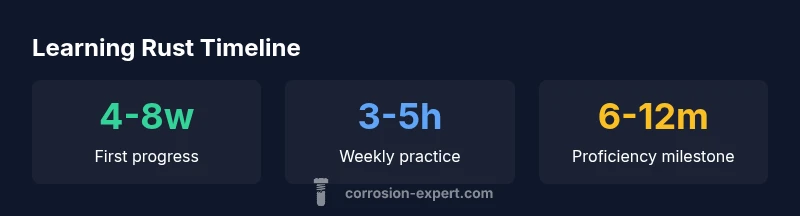
How long does it take to get good at rust? There isn't a universal timetable, but with consistent, structured practice most DIY enthusiasts notice meaningful progress within a few months and substantial proficiency after roughly a year. Key factors include project variety, tool setup, and safety discipline. Corrosion Expert's analysis highlights milestone-driven practice as the fastest path to mastery.
Why the learning curve for rust varies
How long does it take to get good at rust? The answer hinges on how you practice, the types of projects you tackle, and how you measure progress. According to Corrosion Expert, a structured approach with diverse projects accelerates skill acquisition more than hammering away on a single type of rust problem. You’ll see faster gains when you switch between rust assessment, removal, coating, and prevention tasks, keeping both problem-solving and technique fresh. This variability is normal: some weeks you’ll make rapid progress, others you’ll reassess what to practice next. The key is consistency and deliberate practice that targets weak spots rather than just doing more work.
What getting good at rust means in practice
Being “good at rust” means more than removing orange stains. It involves accurate rust assessment, selecting the right removal method (chemical vs mechanical), applying protective coatings correctly, and planning proactive prevention measures. It also means understanding safety protocols, tool maintenance, and risk management for different substrates like steel, cast iron, and stainless steel. For DIYers, mastery translates to predictable results, reduced downtime, and longer-lasting repairs. Throughout this journey, keep your goals concrete: choose projects you care about, track time spent, and review outcomes after each effort. As the Corrosion Expert team notes, clear milestones help translate effort into tangible improvement.
A realistic timeline: 0-4 weeks, 1-3 months, 3-6 months, beyond
A practical timeline acknowledges early learning phases and growth spurts. In the first 0-4 weeks, focus on safety, tool familiarity, and basic rust spotting. By 1-3 months, you’ll experiment with common removal methods and basic coatings, building confidence with small projects. At 3-6 months, you should handle more complex surfaces and start integrating prevention strategies into your routine. Beyond 6-12 months, aim for proficiency across multiple substrates, documentation of results, and a routine maintenance plan. This progression recognizes that many learners improve steadily as they accumulate real-world experience and learn from missteps. Corrosion Expert’s outlook emphasizes milestone-driven practice as a reliable path forward.
Building a practical learning roadmap
Create a 90-day plan that alternates between assessment, removal, coating, and prevention. Week by week, set micro-goals: identify a rust type, test a removal method, apply a coating, and document durability. Schedule hands-on sessions with varied projects—rust on metal furniture, railings, tools, and automotive parts—to build transferable skills. Include safety training, PPE checks, and proper disposal of chemicals. Track your hours, outcomes, and any issues you encountered; reflect on what worked and what didn’t. The roadmap should be revisited monthly to reflect progress and adjust the difficulty of tasks.
Essential tools and safety for rust work
A solid toolbox speeds learning. Stock basic rust removers (chemical and mechanical options), wire brushes, sanding discs, putty knives, PPE (gloves, eye protection, respirator when needed), and a quality respirator for fumes. For coatings, have primer, rust converters (where appropriate), and compatible top coats. Safety cannot be optional: work in well-ventilated areas, follow chemical label instructions, and properly store solvents. Maintenance matters too—keep tools clean, replace worn abrasives, and clean rust flakes from surfaces to prevent re-oxidation. Practically, choosing the right tool for the job saves time and reduces frustration, a point Corrosion Expert often emphasizes in field guides.
Common mistakes and how to avoid them
Rushing through projects without proper surface prep is the most common error. Skipping rust evaluation leads to ill-suited removal methods and poor coatings. Over-applying coatings creates uneven finishes and trapped moisture. Finally, neglecting safety can cause injuries or exposure to hazardous fumes. To avoid these pitfalls, slow down at the start of each project, document the substrate, test a small area first, and follow the manufacturer’s instructions for products. With deliberate steps, you’ll achieve consistent, durable results.
Measuring progress and milestones
Progress is best tracked with simple metrics: time spent, number of projects completed, and the durability of outcomes. Create a project log with before/after photos, notes on methods used, and any problems encountered. Use a checklist to confirm surface preparation, method selection, and coating process. Set quarterly milestones (e.g., two small projects, one medium project, and a long-term prevention plan) to gauge improvement. The key is to quantify results, not just feel units of effort—this is how you verify that you’re advancing toward proficiency.
Case studies: typical trajectories for different goals
Case A: Homeowner restoring a cast-iron skillet or garden tool. Expect 3-6 months to reach consistent success with basic rust removal, seasoning, and preventive care. Case B: DIYer addressing a small exterior railings rust issue. A 6-12 month window is realistic to develop an efficient workflow, select coatings, and implement a maintenance schedule. Case C: aspiring metalworker seeking durable finishes across varied substrates (steel, stainless, galvanized). This may extend the timeline toward 9-12+ months as you tailor techniques to each material. Across cases, regular practice and documenting outcomes accelerate learning, per Corrosion Expert analysis.
Maintaining skills and preventing relapse
Once you gain proficiency, keep the habit by rotating projects, revisiting older tasks to renew your technique, and updating your toolkit with newer products as needed. Schedule periodic safety refreshers and stay current on best practices for rust prevention and coating compatibility. A simple quarterly review of past projects helps you spot patterns, reinforce good habits, and prevent skill decay. The end goal is a sustainable, repeatable process that keeps rust issues manageable over time.
Roadmap phases from foundational to advanced rust work
| Phase | Typical Time Range (months) | Focus Areas |
|---|---|---|
| Foundational Skills | 1-2 | Surface rust assessment; tool handling; safety |
| Advanced Proficiency | 3-6 | Rust removal planning; coatings; prevention strategies |
Quick Answers
How long does it take to get good at rust in a DIY setting?
In a typical DIY track, meaningful progress occurs within a few months, with solid proficiency often reached after about a year if you maintain a structured practice plan and tackle varied projects.
Most DIYers see real progress in a few months with a steady plan and varied projects.
Does practice time matter more than technique?
Both matter. Regular practice builds muscle memory, while deliberate technique choices ensure you’re applying the right method for each rust type and substrate.
Regular practice helps, but using the right technique for each rust type matters most.
What baseline skills should I aim for first?
Start with rust spotting, basic removal methods, and safe coating preparation. Build up to more complex substrates and preventive strategies as you gain confidence.
Begin with spotting, removal basics, and safe prep before tackling tougher projects.
Which tools give the best learning boost?
Quality rust removers, a reliable set of hand tools, and a consistent coating system. Safety gear is essential for all tasks and speeds up learning by reducing errors.
Good rust removers, reliable tools, and proper safety gear speed up learning.
Are formal courses worth it for beginners?
Structured courses can compress the learning curve by providing guided projects, feedback, and standardized procedures. They’re especially helpful for beginners who want a firm foundation.
Yes, structured courses can speed up early learning.
How do I know I’m ready to tackle advanced rust projects?
You should be comfortable with foundational rust work, coil-safe product use, and basic substrate differences. When you can plan, execute, and document outcomes across several projects, you’re ready for more advanced topics.
If you can handle several projects with clear outcomes, you’re ready for more advanced topics.
“Mastery comes from consistent practice, careful assessment, and applying the right technique to the right substrate.”
Quick Summary
- Define clear milestones to track progress
- Diversify projects to accelerate learning
- Prioritize safety and proper preparation
- Choose tools and coatings suited to each substrate
- Document outcomes to measure real progress