Is It OK to Use Cast Iron with Rust? A DIY Guide
Discover if it’s safe to use cast iron with rust, how to assess rust depth, and step-by-step methods to clean, reseason, and restore cookware—plus practical prevention from Corrosion Expert.


Is it ok to use cast iron with rust? In many cases, superficial surface rust on cast iron cookware is safe to use after thorough cleaning and reseasoning, but deep rust that has eaten into the iron can weaken the pan and may pose food safety concerns. This quick guide walks you through how to inspect, clean, and restore cast iron without risking your health or cookware.
Rust on cast iron: surface rust vs deep rust
According to Corrosion Expert, most rust issues on cast iron begin as a thin, flaky layer on the exterior. Surface rust is usually cosmetic and can be removed with basic cleaning plus reseasoning. Deep rust, on the other hand, penetrates the metal, creates pitting, and can compromise structural integrity and safety. When you’re deciding whether to reuse a pan, start with the depth of rust and inspect for dullness, flaking, or crumbling metal. In DIY rust removal, the goal is to restore a uniform, non-porous surface so that seasoning bonds properly. This distinction matters not only for performance but also for food safety, since deeply corroded areas can harbor bacteria and degrade during cooking. The Corrosion Expert team emphasizes cautious evaluation and a conservative approach when rust appears extensive.
Cast iron rust depth and its implications
Depth of rust determines the next steps. A thin, powdery film can often be cleaned off with abrasive-scrub or mechanical methods, whereas rust that has eaten into the cookware or created visible pits may require discarding or professional restoration. When unsure, err on the side of safety. This is especially important for cookware used for acidic foods, where rust particles can leach more easily. Regular maintenance—seasoning after cleaning, avoiding prolonged moisture exposure, and drying thoroughly—significantly reduces future rust formation. For DIY enthusiasts, recognizing the boundary between repairable rust and structural failure is the key to a confident, safe decision. Corrosion Expert notes that many kitchen rust issues are reversible with proper technique and patience.
Quick checks you can do at home
Before you commit to heavy cleaning, perform a simple test: wipe the surface with a dry paper towel to see if rust flakes off easily. If it does, the rust is likely surface-level. If you have to scrub hard and still see flakes, you may be dealing with deeper damage. Examine the pan for cracks, deep pits, or warping. If the metal feels soft or crumbly to the touch, stop and consider replacement. Remember, rust can be a warning sign of thinning metal or compromised seasoning, which could affect heat distribution and safety. The goal is to restore a smooth, dark, nonstick-like surface through proper seasoning after rust removal.
Safe cleaning methods for surface rust
Begin with a non-metallic scrubber to remove loose rust, then apply a paste made from equal parts baking soda and water or use a commercial rust eraser designed for cast iron. For tougher rust, mechanical tools like a copper scrub pad or chain mail can help without excessive metal loss. Rinse thoroughly, dry completely, and heat the pan on a stovetop or oven to ensure all moisture is driven out. Avoid soaking in water for long periods, which can reintroduce rust. After drying, apply a thin layer of oil and heat to set a new seal. This process forms a robust seasoning layer that resists further rust formation.
Restoring seasoning after rust removal
Seasoning is what makes cast iron naturally nonstick and rust-resistant. After cleaning, apply a light coat of high-smoke-point oil (like flaxseed, canola, or peanut oil) and bake at 350–450°F (175–230°C) for an hour, then let it cool in the oven. Repeat the oiling and heating cycle several times to build a hard, durable patina. Maintain the surface with regular light oiling after each use and avoid harsh detergents that strip seasoning. The end result should be a smooth, glossy patina that improves heat distribution and longevity. Corrosion Expert recommends documenting rust-prone areas and adjusting your maintenance routine to address those spots.
When to discard and when to repair
If rust has caused deep pits, cracks, or a soft spot that tears under light pressure, discarding the pan is the safest option. Severe rust can trap bacteria in pores and may compromise structural integrity. For suspected minor damage, you can attempt repair by meticulous rust removal and reseasoning, but avoid using abrasive tools that remove metal thickness. When in doubt, seek a steelwright or cookware restoration service for a professional assessment. A cautious approach protects your health and investment, and allows you to reuse cookware that still serves your kitchen well.
Prevention: keeping cast iron rust-free
To prevent rust, dry cookware immediately after washing, store in a low-humidity area, and apply a thin oil coating after each use. Regular maintenance, including reseasoning every few months if you cook frequently or store damp foods, dramatically reduces rust formation. Avoid soaking metal in water or leaving acidic foods in cast iron for extended periods. If you spot rust forming, address it quickly with the cleaning and seasoning steps outlined above. The right routines can extend the life of your cast iron for generations.
Steps
Estimated time: 60-120 minutes
- 1
Assess rust depth
Inspect the surface to distinguish surface rust from deep corrosion. Check for flaking, pits, or soft spots. Decide whether cleaning or replacement is needed based on the depth and safety considerations.
Tip: Use good lighting and a magnifier if you suspect deep pits. - 2
Remove loose rust
Gently scrub with a non-metallic pad to remove loose rust without removing too much metal. Rinse with warm water and dry immediately.
Tip: Do not use steel wool on cast iron; it can create more scratches. - 3
Thorough drying
Pat dry and then heat the pan to ensure all moisture is gone. Any residual moisture can trigger more rust during reseasoning.
Tip: Use a low-heat oven or skillet on the stove until completely dry. - 4
Reseat seasoning layer
Apply a thin coat of high-smoke-point oil and bake at 350–450°F for one hour. Let cool in the oven and repeat 2–3 times for a robust patina.
Tip: Wipe off excess oil to avoid a sticky surface. - 5
Test and maintain
Cook with fat or oil to build seasoning, then wipe clean after cooling. Re-check after a few uses to ensure rust does not reappear.
Tip: Avoid soaking cast iron for extended periods. - 6
Prevention plan
Establish a routine: dry after washing, oil lightly, and reseason if you notice dull spots. Store in a dry, ventilated area.
Tip: Keep humidity low in storage to reduce rust risk.
Diagnosis: Pan shows rust on exterior, possibly with dullness or flaking
Possible Causes
- highMoisture exposure over time
- highInadequate drying after washing
- mediumCoarse cleaning with abrasive tools
- lowNatural wear of seasoning
Fixes
- easyClean rusted areas with non-metallic scrubber or copper pad, then rinse and dry thoroughly
- mediumApply thin oil and bake to reseason; repeat several times for a durable patina
- hardIf deep pits are present, consult restoration or replace cookware
Quick Answers
Is light rust on cast iron safe to cook with after cleaning?
If rust is superficial and flakes off easily after cleaning, and the pan holds seasoning well, it can be safe to reuse after reseasoning. Never use a pan with deep pits or crumbling metal for cooking. Always inspect before cooking and reseason thoroughly.
Yes, light rust that cleans off and leaves a good seasoning layer can be safe, but always reseason afterwards to restore protection.
Can vinegar or salt remove rust from cast iron?
Vinegar can remove rust but may also etch the surface if left too long. Salt-based pastes are gentler. Always rinse and dry completely, then reseason to restore the protective layer.
You can use vinegar briefly for rust removal, but rinse well and reseason to restore the coating.
When is a rusted cast iron pan beyond repair?
If there are deep pits, cracks, or the metal feels soft or crumbly, replacement is safer. For moderate rust, follow the cleaning and reseasoning steps, but evaluate after a few uses.
Deep pits or soft metal mean replacement is the safer choice after evaluation.
How long does reseasoning take and how often should I do it?
A proper seasoning cycle can take about an hour per round, with multiple rounds recommended for the best coating. Revisit reseasoning as needed based on wear and cooking needs.
Season in cycles, typically multiple rounds, and reseason when you notice dull spots or rust creeping back.
Is it unsafe to use rust remover products on cast iron?
Most commercial rust removers are not designed for cast iron cookware and may leave residues. Stick with food-safe methods and consult a professional for severe cases.
Avoid chemical rust removers on cookware; stick to safe home methods and seek help if unsure.
Watch Video
Quick Summary
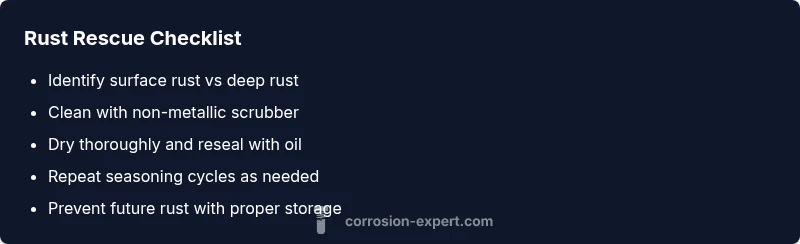
- Inspect rust depth before deciding repair vs discard
- Surface rust is reversible with cleaning and reseasoning
- Deep pits require professional help or replacement
- Seasoning after rust removal is crucial for rust resistance
- Prevent rust with quick drying and regular oiling