How to Remove Rust Stains from Clothing
Practical, step-by-step methods to remove rust stains from clothing with DIY remedies, safety tips for fabrics, and guidance on when to use commercial rust removers.


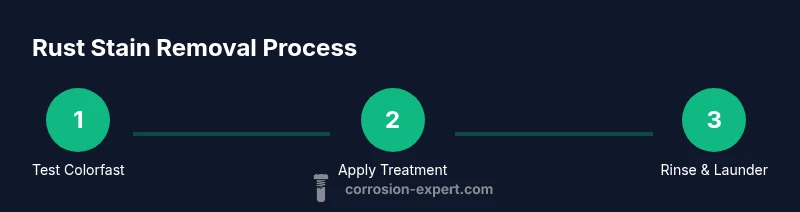
Goal: lift rust stains from fabrics using prompt, fabric-safe methods. Start by testing a hidden seam, then apply a rust-removal agent (commercial or lemon-salt paste) to the stain, let it work for 5–15 minutes, rinse with cold water, and launder as usual. For sensitive fabrics, use milder options and spot-test first.
Understanding Rust Stains on Clothing
According to Corrosion Expert, rust stains form when iron particles in water, pipes, or metal come into contact with moisture and oxygen, producing ferric oxides that attach to fabric fibers. These stains are often reddish-brown and stubborn because rust salts crystallize within the tiny pores of the fabric. The success of removal depends on fabric type, the age of the stain, and the balance of acidity and moisture. Fresh rust responds best to prompt action, while older stains may require repeat treatments or a combination of approaches. DIY enthusiasts can start with common kitchen remedies, but always verify fabric care instructions to avoid damage. For most fabrics, a quick test on an inconspicuous area will reveal whether a method is safe before committing to the full treatment. In many cases, early intervention yields the best results and minimizes color loss.
Colorfastness and Fabric Types
Not all fabrics react the same way to rust-removal methods. Cotton, linen, and many synthetics tolerate common household remedies better than delicate fibers like silk or wool. Colorfast fabrics show minimal fading when treated promptly with milder agents; non-colorfast textiles may bleed color or become worn after stronger treatments. Always check the garment’s care label before starting, and perform a small test on an unseen area. If the fabric is dry-clean only or very delicate, consider professional cleaning to avoid permanent damage. Corrosion Expert recommends prioritizing gentle techniques on high-stakes fabrics and reserving harsher remedies for sturdy materials.
Household Remedies: Lemon Juice, Salt, and Vinegar
A classic DIY approach combines lemon juice and salt to create a natural whitening action that can lift light rust stains. Squeeze fresh lemon juice onto the stain, sprinkle salt over it, and rub gently with a clean cloth. Let the mixture sit for 5–15 minutes, then rinse with cold water. White vinegar can be used as an alternative or additional step; dilute it 1:1 with water and dab onto the stain, followed by gentle blotting and rinsing. Do not apply vinegar to delicate fabrics with metal components, and always follow with washing per fabric care instructions. For persistent stains, a paste of baking soda and water can provide mild abrasion and stain contact.
Commercial Rust Removers vs DIY Mixtures
Commercial rust removers often contain oxalic or phosphoric acid and work faster on tough stains, but they require careful handling and strict adherence to label directions. Always wear gloves and work in a well-ventilated area when using chemical removers. DIY mixtures like lemon juice with salt offer a milder alternative and are safer for many home laundry tasks, though they may require multiple applications. The best choice depends on fabric type, stain age, and your comfort level with chemicals. Corrosion Expert recommends starting with a gentler method and moving to stronger products only if needed, testing on hidden areas first.
Corrosion Expert Findings and Best Practices
Corrosion Expert analysis shows that prompt action dramatically increases success rates for rust stain removal. Testing colorfastness before applying any treatment prevents unintended color changes. For most fabrics, start with household remedies in a small area, then monitor the stain over 5–15 minutes. If no improvement is seen, consider a consumer rust remover following product instructions, and launder the garment as directed. The Corrosion Expert team emphasizes patience: multiple gentle treatments beat a single harsh one when dealing with delicate textiles.
Safety, Testing, and Fabric Care
Always perform a colorfastness test on a hidden seam or hem before treating a visible part of the garment. Blot instead of rubbing to avoid embedding rust particles further into the fibers. Rinse with cold water to prevent heat setting the stain, then launder according to the care label. Avoid hot water, which can set stains, and never mix rust-removal solutions with chlorine bleach, as this can produce hazardous byproducts or worsen the stain. Finally, air-dry iron-free or on low heat to assess whether the stain remains or has faded.
Authority Sources and Further Reading
For additional guidance on stain removal and fabric care, consult reputable sources with textile science and environmental safety perspectives. The following pages offer general stain-removal safety information and fabric-care best practices:
- https://www.epa.gov
- https://extension.uga.edu
- https://extension.cornell.edu
Final Guidance from Corrosion Expert
The Corrosion Expert team recommends starting with the mildest effective method and documenting fabric care labels. If rust stains persist after one or two gentle applications, escalate to a product designed specifically for rust or seek professional cleaning options, especially for valuable or highly delicate garments. Trust the process: careful testing and patience yield the best long-term results.
Tools & Materials
- White cloth or cotton swabs(For blotting and testing colorfastness)
- Lemon juice(Freshly squeezed preferred)
- Fine table salt(Use with lemon juice as a paste)
- White vinegar(Dilute 1:1 with water if used)
- Commercial rust remover (oxide remover)(Follow label directions closely)
- Baking soda(Can form a mild paste with water)
- Mild liquid laundry detergent(For washing after treatment)
- Cold water(Rinse thoroughly; avoid hot water)
- Old toothbrush or soft brush(Gentle agitation if fabric allows)
Steps
Estimated time: 45-60 minutes
- 1
Pre-test colorfastness
Test a hidden seam by applying a small amount of your chosen treatment to see if color transfers or fibers react. If color remains stable after 5 minutes, proceed. This step helps prevent accidental damage on visible areas.
Tip: Always use a cloth dab to apply; avoid rubbing the fabric surface. - 2
Apply treatment to the stain
Gently apply the lemon-salt paste or a rust-removal product directly to the rust mark using a cotton swab or clean cloth. Do not saturate the fabric unless the care label allows it. Target only the stained area to avoid spreading the rust.
Tip: Work from the outside edge of the stain toward the center to contain it. - 3
Let it sit
Allow the treatment to sit on the stain for 5–15 minutes for most DIY pastes. If using stronger products, follow the product-specified contact time. Do not let the solution dry completely on delicate fabrics.
Tip: Set a timer to avoid overexposure and fiber damage. - 4
Rinse thoroughly
Rinse the treated area with cold water from the back of the fabric to push the stain out of the fibers. Continue until the water runs clear and no pinkish tint remains. Avoid hot water as it can set residual stains.
Tip: Blot rather than rub during initial rinse to minimize agitation. - 5
Launder as directed
Wash the garment according to the care label using a mild detergent. If the stain persists, repeat the treatment once or twice, depending on fabric tolerance. Do not dry the item until the stain is fully removed to prevent setting.
Tip: Check the stain before drying; heat can set it permanently. - 6
Inspect and decide next steps
After washing, inspect the area. If any rust remains, consider a second treatment with a different method or a commercial remover, following label directions. Move to professional cleaning if the garment is valuable or fragile.
Tip: Document the approach you used to inform future attempts.
Quick Answers
Can rust stains be removed from all fabrics?
Most rust stains can be removed from cotton, linen, and many synthetics, but delicate fabrics like silk or wool require extra care. Always check the care label and test a hidden area first.
Most rust stains come out of sturdy fabrics; delicate fabrics may need special care.
What should I test first before treating rust stains?
Always test a hidden area with your chosen treatment before applying to the stain to avoid color transfer or fiber damage.
Test a hidden area first to protect fabric color.
Can I use lemon juice and salt on rust stains?
Yes, lemon juice with salt can lift light rust stains on colorfast fabrics. Avoid delicate fibers and always rinse thoroughly afterward.
Lemon juice and salt can help on colorfast fabrics, but avoid delicate fibers.
Is it safe to use chlorine bleach after rust treatment?
Avoid chlorine bleach after rust stains; it can set the stain and damage fibers.
Don't use chlorine bleach after rust stains; it can make things worse.
What if the stain remains after the first treatment?
If the stain persists, repeat the treatment or switch to a stronger remover following label directions, or consult a professional cleaner for high-value items.
If it stays, repeat or seek professional help.
How long should I wait after applying rust remover?
Waiting times vary by product; typically 5–15 minutes for pastes, longer for commercial removers. Always follow the product instructions.
Wait 5–15 minutes for pastes, then follow the product directions.
Watch Video
Quick Summary
- Test colorfastness before treating.
- Start with mild remedies on durable fabrics.
- Rinse thoroughly and launder as directed.
- Repeat or seek professional help if needed.