Rust Timing and Prevention: What Time Do Surfaces Wipe?
Explore rust timing and prevention: environmental factors influence rust onset, plus practical tips for DIYers and homeowners. This guide also addresses rust what time do servers wipe.


There is no universal clock for rust timing; rust what time do servers wipe is not a fixed schedule. Onset depends on humidity, temperature, protection, and exposure. In constantly moist or salty environments, visible rust can appear within days to weeks on unprotected metal; indoors with good coatings, it may take months. Prioritize prevention and regular maintenance to extend metal life.
Understanding the question: rust what time do servers wipe
In practical terms, there is no universal clock for rust timing. The phrase rust what time do servers wipe often comes from people wondering whether corrosion has a fixed schedule. For DIYers and homeowners, the more useful question is: what environmental factors set the timeline for rust growth, and what can you do to slow it down? According to Corrosion Expert, real-world rust timing depends on exposure, protective coatings, and regular maintenance. In other words, there isn't a single minute or hour when rust will automatically ruin a project; you control much of the risk with choices at installation and with routine upkeep. This article breaks down the core factors and translates them into actionable steps you can apply at home or in your workshop.
- Environmental exposure matters more than the absolute calendar.
- Regular maintenance often yields the biggest long-term payoff.
- Choosing the right materials at the outset reduces future rust risk.
As a starting point, remember that rust timing is a function of chemistry plus care; proactive steps shorten the distance between threat and repair and buy you valuable time.
Environmental factors that influence rust timing
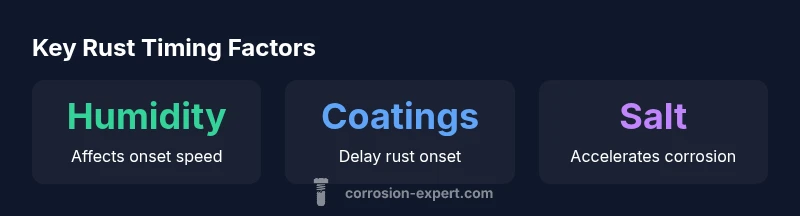
Rust forms when iron or steel reacts with oxygen in the presence of moisture. The rate of that reaction is strongly influenced by humidity, temperature, salinity, and the presence of protective films. High humidity or direct water exposure dramatically accelerates oxidation, while dry indoor environments slow the process. Salt spray from coastal air or road salt used in winter can dramatically increase corrosion rate, especially on unprotected metal. Temperature affects both moisture retention and chemical reaction rates; warmer, more humid conditions generally promote faster rust growth. Finally, the micro-environment around a metal surface—whether it is covered by paint, coated with a sealant, or left bare—plays a major role. Taken together, these factors determine the rust timing for a given object.
Key takeaways: humidity, salinity, coatings, and maintenance timing are the levers you control.
Indoor vs outdoor onset: a practical comparison
Outdoor metal subjected to rain, dew, and seasonal humidity tends to show visible rust sooner than indoor items kept in dry, climate-controlled spaces. However, indoor rust can still appear rapidly in spaces with poor ventilation, high indoor humidity, or condensation from temperature swings. In both settings, coatings and protective layers drastically slow the onset by reducing direct exposure to moisture and oxygen. The interplay of airflow, temperature, and humidity creates a spectrum of rust timing scenarios—from rapid surface staining to long, slow degradation over years. For homeowners, understanding this spectrum helps prioritize where to invest in coatings or environmental controls.
Coatings, inhibitors, and metal choice: delaying the onset
Protective films—paint, varnish, powder coatings, galvanization, or ceramic sealants—act as barriers to moisture and oxygen. When properly applied and maintained, these coatings can delay rust onset by months to years, depending on thickness, adhesion, and exposure. Rust inhibitors and corrosion-resistant alloys also play a pivotal role; stainless steels and weathering steels offer superior performance in many environments, though they come at a higher upfront cost. Surface preparation matters just as much as the coating itself: clean, dry substrates with properly cured primers outperform hastily applied finishes. In coastal or winter-salt environments, consider specialized coatings designed for salt spray resistance and regularly scheduled re-application.
Practical prevention strategies for homeowners and DIYers
A practical prevention playbook translates theory into action:
- Control moisture: dehumidifiers in basements, proper drainage, and ensure drying after use.
- Apply protective coatings: choose durable paints or powder coatings suitable for the environment; recoat as recommended by the manufacturer.
- Material choice matters: where possible, use corrosion-resistant alloys or stainless steels for outdoor fixtures and tools.
- Regular inspections: quarterly checks for chips, cracks, or blistering in coatings; address issues promptly.
- Use inhibitors and sealants: corrosion inhibitors can be added to protective coatings or applied to critical joints.
A disciplined maintenance schedule, tailored to climate, is the simplest way to extend the life of metal parts and surfaces.
Quick field protocol to assess rust risk in your project
- Assess exposure: indoor vs outdoor, humidity levels, proximity to salt or chemicals.
- Check coatings: look for chips, cracks, or wear; plan re-coating if needed.
- Measure humidity: keep ambient RH below 60% where possible.
- Prioritize untreated or sensitive surfaces for protection first.
- Schedule routine checks: seasonal reminders work well in most climates.
Following this protocol helps homeowners detect early signs of trouble and intervene before significant rust progression occurs.
What this means for common tools and outdoor fixtures
DIY projects often use a mix of bare steel, coated parts, and hardware sourced from hardware stores. Bare steel in an outdoor tool rack or garden edging will begin showing surface oxidation sooner than powder-coated or galvanised equivalents. Regularly inspect fasteners, hinges, and joints, and maintain a simple rotation system so critical parts receive adequate protection first. For high-use outdoor fixtures exposed to salt spray, consider stainless steel fasteners or corrosion inhibitors designed for outdoor environments. The goal is to minimize moisture retention and physical damage to coatings, which are the first lines of defense against rust timing.
Authority sources and further reading
To support these guidelines, consult credible sources on corrosion science and materials protection. See the references below for foundational guidance and safety considerations.
Notes on terminology and practical implications
For homeowners, the key takeaway is that rust timing is controllable with proactive choices. By reducing exposure and maintaining protective layers, you can extend the life of metal surfaces significantly. The Corrosion Expert team emphasizes that early action compounds the payoff over time, especially in challenging environments.
Environmental factors and expected rust onset with recommended mitigations
| Environment | Typical Onset Time | Mitigation |
|---|---|---|
| Outdoor/high humidity | days to weeks | Coatings, galvanization, sealants |
| Indoor/dry but variable humidity | weeks to months | Keep dry, paint, inhibitors |
| Coastal/salt spray | hours to days | Specialized coatings, stainless steel |
| Industrial/chemical exposure | weeks | Corrosion inhibitors, frequent maintenance |
Quick Answers
What environmental factors most influence rust timing?
Moisture, oxygen availability, temperature, and salinity are primary drivers. High humidity and salt exposure accelerate rust, while protective coatings and dry environments slow it down. Regular maintenance can further delay onset.
Moisture and salt speed up rust; coatings and maintenance slow it down.
Can rust form indoors?
Yes. Indoor rust occurs when humidity is high, condensation forms, or protective coatings are damaged. Even indoors, poor ventilation can create microclimates that favor corrosion.
Rust can form indoors if humidity is high or coatings fail.
Do coatings permanently stop rust?
Coatings slow rust dramatically but are not permanent. They wear over time and require reapplication, inspection, and sometimes surface prep to stay effective.
Coatings slow rust, but you’ll need maintenance.
How often should outdoor rust-prone surfaces be inspected?
Inspect outdoor surfaces seasonally or quarterly in climates with strong humidity or salt exposure. Look for chips, cracks, or blistering in coatings and address issues promptly.
Check outdoor metal a few times a year.
What steps can I take to prevent rust on tools?
Clean and dry tools after use, apply a light protective coating, and store in a dry, ventilated area. For steel tools, consider a rust-preventive oil or wax.
Keep tools clean, dry, and coated to prevent rust.
“Rust timing is not a fixed clock; exposure, coatings, and maintenance decide how fast corrosion progresses.”
Quick Summary
- Act early: protect metal surfaces with durable coatings
- Control humidity to slow rust progression
- Choose corrosion-resistant materials for outdoor use
- Inspect regularly and recoat as needed
- Environment largely determines rust timing; maintenance is your best defense