Does Titanium Rust? Understanding Titanium's Corrosion Resistance
Discover whether titanium rusts, how its oxide layer protects it, and the conditions that can still cause corrosion. Practical tips for selecting alloys and maintaining titanium in challenging environments.


Does titanium rust? In ordinary conditions, the short answer is no. Titanium naturally forms a tight, self-healing oxide layer that protects it from water, oxygen, and typical indoor environments. Only under extreme chemical conditions—such as strong oxidizers, highly fluoride-rich solutions, or specialized industrial environments—can titanium suffer corrosion. For practical purposes, titanium’s rust resistance makes it a preferred choice for aerospace, marine, and medical applications, provided the correct alloy and design are selected.
Titanium and rust: what's the real story
When people ask does titanium rust, they’re really asking about corrosion in non-ferrous metals. The answer hinges on the material’s behavior in different environments. Titanium does not form iron oxides (rust) because it contains no iron. Instead, it develops a thin, highly adherent oxide layer that passivates the surface. In everyday settings—from air at room temperature to mildly humid indoor spaces—this oxide layer acts as a barrier that slows or stops corrosion. For most DIY projects and household applications, titanium will remain visually free of rust and functionally intact for many years. The nuance comes when you expose titanium to aggressive chemicals or chloride-rich environments, where the protective film can be challenged.
The science behind titanium's oxide layer
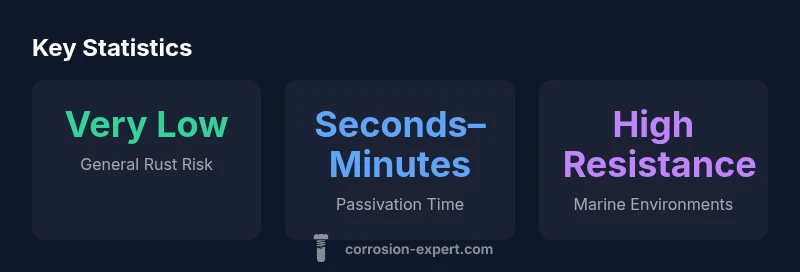
The cornerstone of titanium’s corrosion resistance is its natural oxide film, typically a few atoms thick, that forms spontaneously when fresh titanium encounters oxygen. This passivation layer is self-healing: if damaged, adjacent titanium atoms re-oxidize to restore protection. This is why titanium often behaves as a corrosion-resistant metal in air, water, and mild acids. Unlike iron, titanium’s oxide layer does not easily convert to rust because rust is iron oxide. In essence, titanium rusts in a very different, far less common sense. Environmental factors such as high oxidizers, fluoride-rich salts, or extreme pH levels can erode the protective film, allowing localized corrosion in rare cases.
Environmental factors that can challenge titanium
Not all environments are equal for titanium. Mild, neutral water and dry air rarely threaten the oxide layer. Chloride-containing solutions, high temperatures, and aggressive oxidizers can destabilize the passive film. In marine or industrial contexts, crevice corrosion or pitting may occur if protective layers are compromised by mechanical wear or improper design. High fluoride concentrations can also pose a challenge, particularly in certain chemical processing contexts. Understanding the specific environment is essential to predicting whether titanium will remain rust-free over time.
Pure titanium vs alloyed forms: what to expect
Titanium used in practical applications comes in several forms, including highly pure grades and alloys designed for strength and heat resistance. The presence of alloying elements like aluminum, vanadium, or molybdenum can influence corrosion behavior. Generally, well-formulated alloys retain the protective oxide film, but certain alloying constituents can affect passivation under extreme conditions. In most consumer and structural applications, the natural oxide layer remains the primary defense, with design choices and protective measures further reducing risk. This means that a properly selected alloy, combined with appropriate design, significantly lowers corrosion chances.
Real-world scenarios: aerospace, marine, and medical applications
In aerospace and automotive components, titanium’s corrosion resistance translates into longevity and reduced maintenance, especially in oxidizing environments and high-temperature operation. In marine settings, titanium resists many forms of corrosion but remains sensitive to crevice corrosion in tight spaces with limited water flow and high chloride exposure. Medical implants rely on biocompatible titanium that also resists corrosion in bodily fluids. While titanium performs exceptionally well in many environments, engineers must account for potential fluoride exposure, sterilization processes, and long-term loading to avoid unexpected degradation.
Practical tips to minimize corrosion risk for titanium
To maximize titanium’s corrosion resistance, consider alloy selection, surface finish, and design features. Avoid abrasive wear that can remove the protective oxide layer, and ensure joints allow for adequate water drainage and flow to minimize stagnant chloride exposure. For harsh environments, choose alloys or coatings designed to bolster protection, and ensure proper maintenance routines (inspection, cleaning, and replacement of degraded components) are in place. Finally, recognize that while titanium is highly resistant, no material is immune—context matters, and environment-driven assessments are essential for durability.
Titanium resilience vs iron under common environments
| Environment | Titanium behavior | Iron comparison |
|---|---|---|
| Air/ambient | Forms a robust oxide film; corrosion rate negligible | Rust forms readily on iron and steel in similar conditions |
| Seawater/Marine | Very high resistance; crevice/pitting possible under specific conditions | Iron corrodes more quickly; rust is common in marine exposure |
| Acidic oxidizers (strong acids/fluorides) | Protection depends on alloy; potential for localized attack in aggressive fluoride environments | Iron shows higher general corrosion risk in most acids |
Quick Answers
Does titanium rust in seawater?
Titanium shows very high resistance in seawater, but crevice corrosion or pitting can occur if water flow is restricted or chloride concentrations are extreme. Overall, titanium outperforms many ferrous metals in marine environments.
Titanium resists seawater well, though certain conditions can cause localized corrosion.
Can titanium rust in air or water alone?
Under normal air and freshwater exposure, titanium rarely rusts. The protective oxide layer is maintained, and degradation is unlikely without aggressive chemicals or high heat.
In typical air or water, titanium stays rust-free.
Is titanium rust-proof?
No material is entirely rust-proof. Titanium is highly resistant, but certain environments—strong oxidizers, high fluoride contamination, or extreme pH—can lead to corrosion through local attack.
It's exceptionally resistant, but not absolutely rust-proof.
Do titanium implants rust inside the body?
Titanium implants are designed for biocompatibility and corrosion resistance in bodily fluids. Significant rust is unlikely, but long-term exposure to aggressive bodily conditions or surface wear can influence performance.
Implants are built to resist corrosion inside the body, but ongoing monitoring is wise.
How does alloy composition affect rust risk?
Alloying elements improve strength and corrosion resistance, but certain combinations can alter passivation behavior under extreme conditions. The takeaway is to align alloy choice with environmental exposure and mechanical demands.
Alloy makeup matters for rust risk in harsh settings.
What maintenance helps titanium stay corrosion-free?
Regular inspection for surface damage, avoiding aggressive chemicals near titanium components, and ensuring protective coatings or surface finishes are intact will help maintain corrosion resistance.
Keep it clean, inspect for wear, and protect exposed surfaces.
“Titanium's natural oxide layer provides a robust, self-healing barrier that generally prevents rust outright in most everyday environments. Only extreme chemical exposure and certain oxide-accelerating conditions pose corrosion risks.”
Quick Summary
- Titanium resists rust in typical environments due to a self-healing oxide layer.
- Corrosion risk rises only under extreme oxidizers or fluoride-rich conditions.
- Alloy design and environment determine titanium’s long-term durability.
- In marine and high-chloride settings, careful design is essential to prevent crevice corrosion.
- For DIY projects, titanium offers strong corrosion resistance when properly specified.